How to Choose Pipes for a Gas Line in an Apartment or Private House
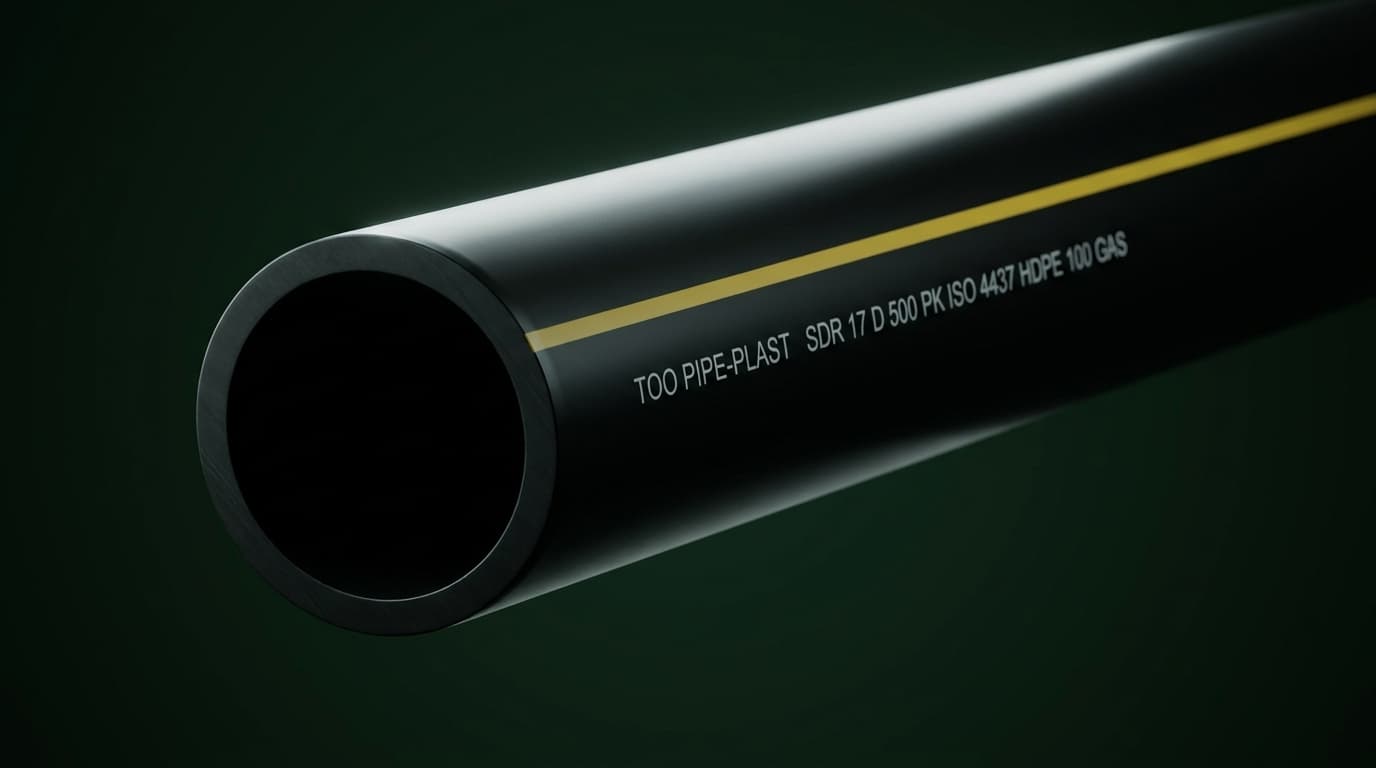
The choice depends on the section. The underground gas line from the network to the house is made of PE100 polyethylene to ST RK GOST R 50838-2011: a black pipe with yellow marking, SDR11 or thicker. Inside the house or apartment, steel or copper pipes are used. The design sets the material, diameter and wall thickness, and the gas service or a licensed company installs and accepts the line — gas pipes are not chosen or installed on your own.
What sections make up the gas line of a private house or apartment?
The gas line from the network to the appliance is divided into sections, and each has its own material.
- The distribution main along the street — underground, polyethylene or steel; owned by the gas supply company.
- The service line to the house — underground PE100 polyethylene pipe; where it comes out of the ground, a permanent polyethylene-to-steel transition joint.
- Indoor piping — steel or copper pipes to the stove, boiler or water heater.
In an apartment of a multi-storey building you deal only with the last section, and the connection to the stove or water heater is selected according to the design. In a private house, the design is commissioned for the entire route — from the connection point to the appliances — and the materials are chosen from it.
Which pipes should you choose for the underground section to the house?
For the underground service line, choose a gas polyethylene pipe: PE100 to ST RK GOST R 50838-2011, black with yellow marking or a yellow outer layer. Polyethylene does not corrode and is flexible, and small-diameter pipes are supplied in 50–200 m coils, so a service line can be run with a minimum of joints.
Such pipes are joined by welding — electrofusion or heated-tool butt welding; threads are not cut on polyethylene. A water pipe with a blue stripe is unsuitable for gas, even if the diameter matches. We manufacture PE100 gas pipes to this standard; please confirm the availability of the diameter you need on WhatsApp +7 707 755 54 07.
How do you choose the diameter and SDR of a gas pipe?
SDR is the ratio of outside diameter to wall thickness: a d110 SDR11 pipe has a 10 mm wall. The lower the SDR, the thicker the wall. For gas, SDR11 and thicker is used (that is, SDR11 and lower); the exact value depends on the gas pressure in the network and the laying conditions.
The diameter is determined by the designer by calculation: total appliance power, gas pressure, route length and permissible pressure loss. Taking "a bit extra" by guesswork is not advisable: too large a diameter makes the service line and welding more expensive, too small causes a pressure drop and faults in appliance operation. That is why the pipe buyer gives the supplier the diameter and SDR from the design, not the other way round.
Which pipes should you choose for piping inside the house?
Inside a building, gas runs through steel or copper pipes; polyethylene, polypropylene, PVC and metal-plastic are not used for gas piping. The type of steel pipe — thin-wall welded or seamless — depends on the gas pressure in the system: the higher it is, the stronger the pipe the design requires.
Copper is comparable to steel in reliability and lighter, but noticeably more expensive, so it is used less often. Steel pipe is protected against corrosion with paint. Appliances are connected with a flexible connector approved for gas: this is a consumable with a service life, and it is replaced when that life expires.
What should you check when buying pipes, and who chooses them?
In both an apartment and a private house, the pipes are chosen by the design company, and the material is usually bought by the installation company from the design specification. If you buy it yourself, check:
- the marking on the pipe: standard, material, diameter, SDR or wall thickness, production date;
- the certificate of conformity and the batch data sheet;
- that the material and size match the design — no "equivalents" of your own choosing.
Agree any change of material with the designer in writing. Do not buy pipes without marking and documents: they are mandatory for gas material. The line is installed only by a licensed company and accepted by the gas service.
Frequently asked questions
- How is the diameter of a gas pipe calculated?
- The designer calculates it from the total gas consumption of the appliances, the pressure in the line, the route length and the permissible pressure loss. The "same as the neighbours" rule does not work: two houses with identical pipes have different appliances and route lengths.
- What is the service life of an underground polyethylene gas pipe?
- The design service life of PE100 pipes is 50 years, provided operating conditions are met: correct installation, welding done to the procedure and no mechanical damage. The real service life depends largely on the quality of the welded joints.
- Which is better for indoor piping — steel or copper?
- Both materials are acceptable if the design provides for them. Steel is common and readily available; copper is lighter and easier to install, but noticeably more expensive. The choice is fixed in the design and depends on the room conditions and the capabilities of the installation company.
- Do I need to buy the gas pipes myself in an apartment?
- Usually not: the materials are selected by the design company, and bought and installed by a licensed contractor. If you buy them yourself, do so only from the design specification, with a certificate and marking, and only a licensed company installs them.