Pipe-Plast
02HDPE GAS · PE100

Gas supply pipes

Pressure gas PE100 HDPE pipes, gas working pressure up to 10 bar. Typically SDR11.

СТ РК ГОСТ Р 50838-2011 / СТ РК ISO 4437-2014Ø20–1200 mmPE100
Selected sizeSDR11
Ø630 mm
Wall 57.2 mm
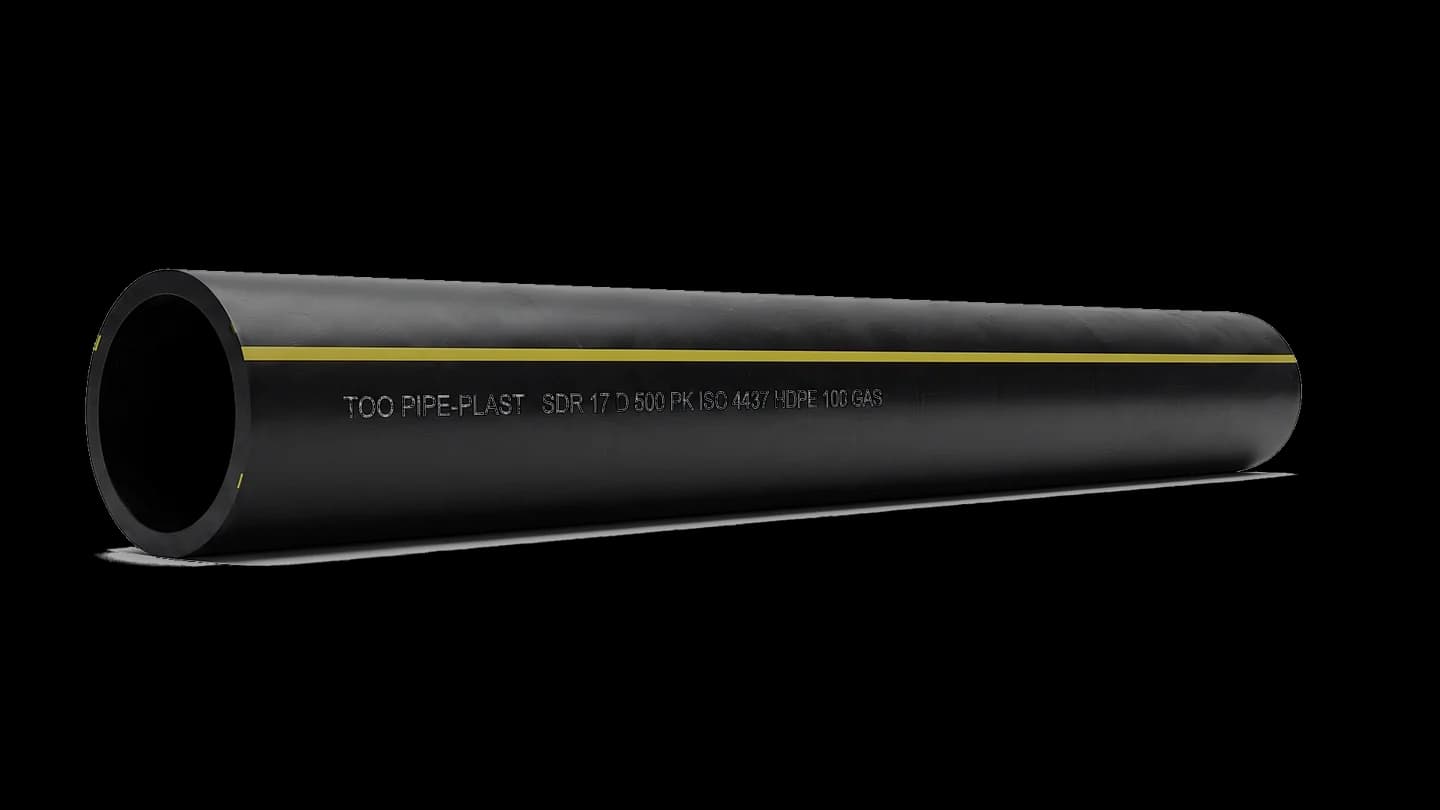
PE100 HDPE gas pipe, black body, ST RK GOST R 50838-2011 / ST RK ISO 4437-2014 — made by Pipe-Plast, Almaty
630mm
SDR
SDR11
Pressure
16 atm
Wall thickness
57.2 mm
Service life
50 years

Choose a diameter

11 sizes · in stock

Need another diameter, class or coil supply? Request a quote →

About the product

Which pipe is needed for a gas pipeline?

Gas pipelines use PE100 to ST RK GOST R 50838-2011 / ST RK ISO 4437-2014, typically SDR11 class, with gas working pressure up to 10 bar. Pipe-Plast manufactures gas pipes d20–1200 mm; for example, d200 SDR11 has a wall thickness of 18.2 mm, d630 — 57.2 mm, d1200 — 109.0 mm. Diameter and SDR selection is based on design gas pressure and gas supply standards.

Distribution and inlet gas pipelines of low and medium pressure to ST RK GOST R 50838-2011 / ST RK ISO 4437-2014.

Applications

Distribution gas pipelines

Low and medium pressure gas supply networks.

Inlet gas pipelines

Gas supply to buildings and facilities, up to 10 bar.

Underground installation

Corrosion-resistant steel replacement per ST RK GOST R 50838-2011 / ST RK ISO 4437-2014.

Order terms

  • Minimum order — from 200 linear metres.
  • Production lead time — 2–5 working days.
Buyer's guide
01

How to choose a gas pipe's diameter and class?

The gas pipeline diameter is determined by the design gas flow and the network's working pressure. Pipe-Plast produces gas pipes in diameters from 20 to 1200 mm, covering medium- and high-pressure distribution and trunk gas lines. Gas supply uses the SDR11 class: it gives a thick wall and the safety margin required for transporting gas.

Unlike water supply, thin-walled classes are not used for gas — safety and pressure reserve matter more than throughput here. If you are unsure about the diameter and SDR, our manager will calculate them for your project and the pipeline's pressure category.

02

How does a gas pipe differ from a water pipe?

Visually, a gas pipe is black with a yellow longitudinal stripe (or fully yellow in small diameters), whereas water pipes are marked blue. The yellow marking is a mandatory GOST identifier for a gas line — it lets you unambiguously recognise the pipe in the trench and avoid confusing networks during laying and repair.

Beyond colour, gas pipes are made to a separate standard, ST RK GOST R 50838-2011 / ST RK ISO 4437-2014, with stricter requirements for material and wall. Only virgin PE100 with confirmed quality is used for gas — recycled feedstock is not allowed for gas pipelines.

03

What material are gas pipes made of?

Pipe-Plast gas pipes are made of PE100 polyethylene — a modern pressure material with high resistance to internal pressure and a long service life. PE100 retains its properties at sub-zero temperatures, which matters for underground laying in Kazakhstan's climate.

Polyethylene does not corrode, scale up or require cathodic protection, unlike steel gas lines. The design service life of a PE100 gas pipe is at least 50 years, which lowers network maintenance costs over the whole operating period.

04

How are gas pipes laid and joined?

Polyethylene gas pipelines are laid below the frost line, with a sand bed and a warning tape marker. A protection zone is established along the pipeline, within which excavation is restricted — a safety requirement taken into account during design.

Gas pipes are joined by butt or electrofusion welding — only with certified equipment and welders qualified for gas networks. Compression fittings are not used for underground gas lines. Pipe-Plast helps select the joining method and equipment for the specific project.

05

What documents are required for a gas pipeline?

Pipe-Plast provides a quality passport and a certificate of conformity to ST RK GOST R 50838-2011 / ST RK ISO 4437-2014 with every batch. For gas networks, documentary proof of the polyethylene grade and SDR class is mandatory — without it the pipe will not be accepted at pipeline commissioning.

The full document package suits tenders, public procurement and approval with gas distribution operators. Certificates and passports can be viewed in the About section; if your project needs a specific set, ask the manager — we will prepare it to your requirements.

  • In-house manufacturing
  • On the market since 2008
  • 50-year service life
  • Certificates & GOST
Manufacturer pricing

We will price it for your diameter and volume

Price depends on the product spec. Call or leave a request — our team will pick the diameter, stiffness and quantity and arrange delivery.