Gas Pipe Installation Inside a House: Rules and Procedure
Inside a house, gas piping is made of steel or copper — polyethylene pipes are not used for gas inside buildings. The work is carried out by a licensed company to a design approved in the established manner, and after installation the line is leak-tested and accepted by the gas service. Polyethylene is used only on the underground service line up to the building. Installing or relocating gas piping yourself is prohibited.
What pipes are used for gas piping inside a house?
Indoor gas piping is made of steel or copper pipes, or of certified systems if the design provides for them. The designer selects the material, diameter and wall thickness, taking into account gas pressure, appliance power and route length.
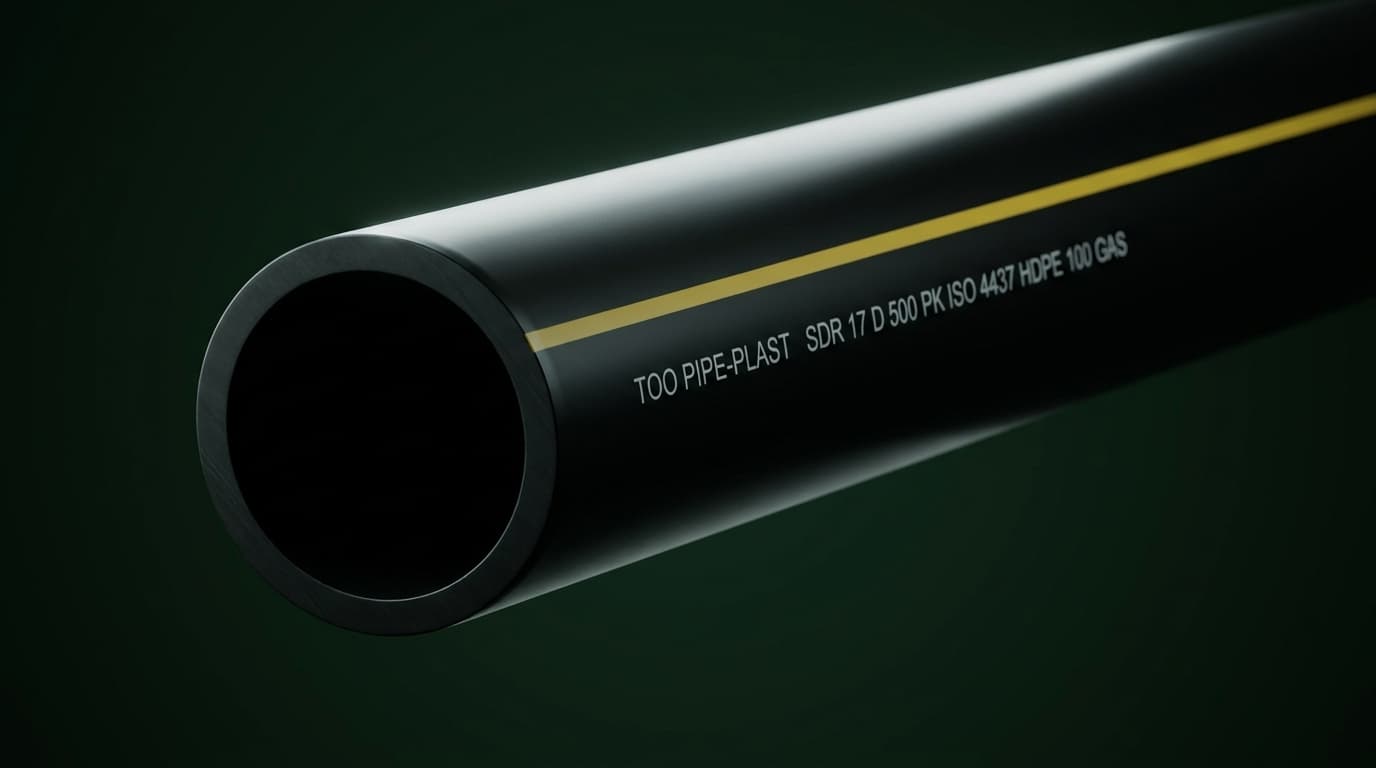
Polyethylene pipes, including PE100 gas pipes, are not laid inside buildings. Polyethylene is used on the underground section from the gas line to the house; at the entry point it is joined to steel with a permanent polyethylene-to-steel transition, and from there steel or copper runs into the building. The underground service line is exactly where the PE100 gas pipes to ST RK GOST R 50838-2011 that we manufacture are used. Polypropylene, metal-plastic and other water pipes are unsuitable for gas.
In what order is gas piping installed?
The procedure is broadly the same for a private house and an apartment; confirm the details with the gas supply company in your area.
- Obtain technical conditions for connecting or modifying the gas line.
- Commission a design from a licensed design company: it specifies the route, materials, valves and appliances.
- Have the design approved in the established manner.
- Installation by a licensed company; pipes, valves and appliances must come with certificates and data sheets.
- Leak testing, acceptance and gas start-up by the gas service.
- Sign a maintenance contract for the gas equipment.
Moving a stove, water heater or boiler in a way that changes the pipe route is also a modification of the gas line and requires the same procedure.
What rules apply to routing a gas pipe in a house?
Specific distances and tolerances are set by the design under the norms in force, but the general principles are as follows.
- The entry into the building goes through the wall in a steel sleeve with the gap sealed; entries are not made through or under the foundation.
- Exposed routing is the main method; concealed routing is allowed only where the norms permit, with an easily removable ventilated cover and no demountable joints in the closed part.
- The pipe is not run in ventilation ducts or shafts, in places that are hard to reach, or across door and window openings.
- Pipe joints are welded; threaded and flanged joints are allowed only at appliances, valves and regulators and must be accessible for inspection.
- A shut-off valve is installed before each appliance.
- The design sets clearances from electrical wiring, panels and heating appliances, room ventilation and non-combustible finishes near the pipe.
Why shouldn't you install or relocate gas piping yourself?
A mixture of gas and air is explosive, and incomplete combustion produces carbon monoxide. A mistake that ends in a puddle on a water line ends in an explosion on a gas line: a poorly tightened joint, the wrong pipe, a route through a ventilation duct. Some defects cannot be seen until the joint is put under pressure, which is why testing and acceptance are carried out by the service, not by the owner.
Gas piping modified without authorisation is grounds for cutting off the gas and for the owner's liability. Contact only a licensed company: check its licence and contract, and ask for the design and the documents for the materials.
What should you do if you smell gas in the house?
These are actions for an emergency, not a repair.
- Close the valve on the supply line if you can do so safely.
- Open windows and doors and ventilate the room.
- Do not switch lights or electrical appliances on or off, do not light a flame and do not use a phone inside.
- Leave the house and call the emergency gas service on 104 or 112 from a safe place.
Until the service arrives, do not try to find and fix the leak yourself.
Frequently asked questions
- What documents should I have after gas piping is installed?
- The design approved in the established manner; certificates and data sheets for the pipes, valves and appliances; the leak-test and acceptance report; and a maintenance contract for the gas equipment. Keep the set — you will need it for inspections and any changes.
- Can a gas pipe be hidden in a wall or behind a box?
- Concealed routing is allowed only in the cases and the way permitted by the norms and shown in the design: in a chase with an easily removable ventilated cover and no demountable joints in the closed part. The pipe must not be walled in or boxed in with a sealed box — it must stay accessible for inspection and repair.
- Can I move the stove or boiler if the hose does not reach?
- No, if that means changing the pipe route or extending the connection beyond what the design provides. That is a modification of the gas line: it requires a design, a licensed company and acceptance by the gas service.
- How often should indoor gas piping be inspected?
- The frequency of servicing and inspection is set by the contract with the servicing company in line with the norms. Let specialists in to the equipment no less often than that, and call the gas service at once if you smell gas, the flame is uneven or a pipe is damaged.