How to Build Bathhouse Plumbing: Pipes, Inlet and Winter Drain
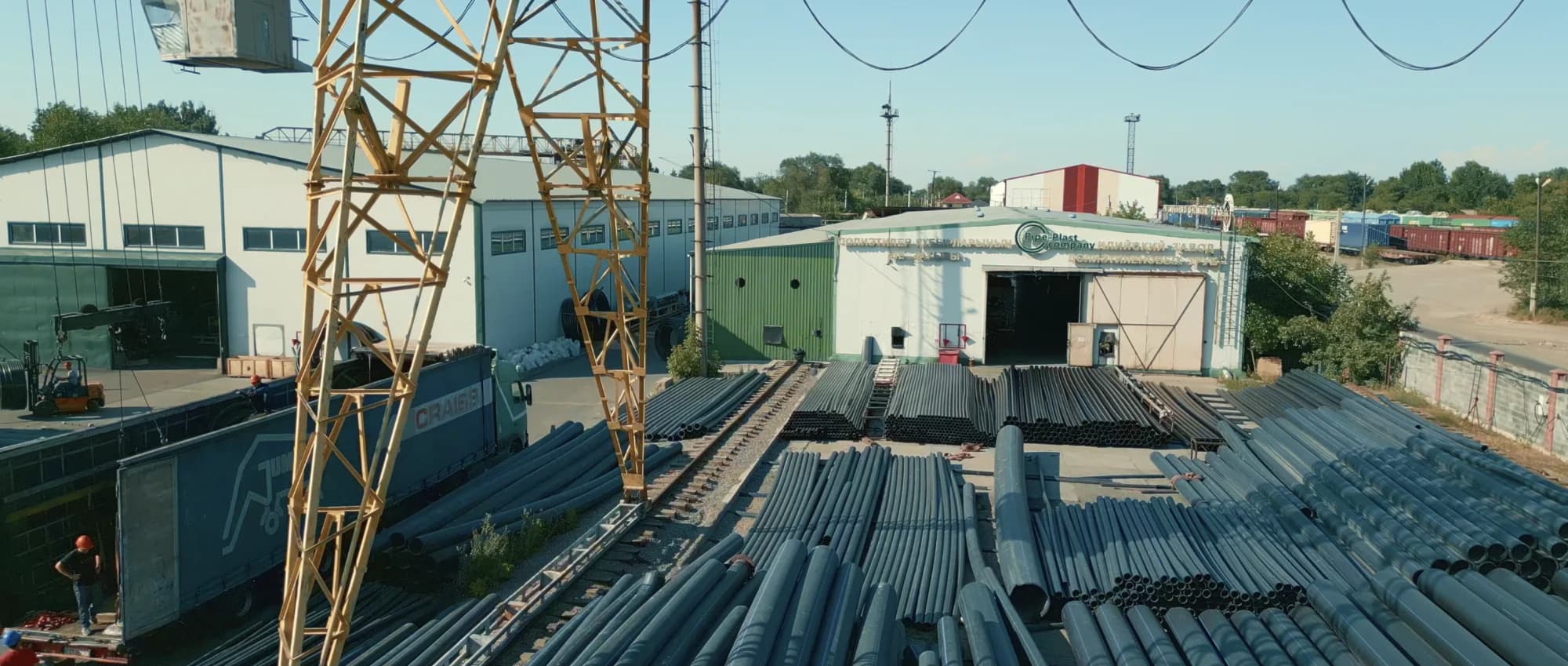
A bathhouse water line is laid in PE100 polyethylene pipe of 25–32 mm: the outdoor part goes below frost depth or with a fall to a drain valve, and enters the bathhouse through a sleeve in the wall. PE supplies cold water; hot water comes from a water heater or the stove tank, because PE pipe is not suited to hot water, its limit being +40 °C. Plan a way to drain the system for winter in advance.
Where does the water come from and which scheme should you choose?
The source is a well, a borehole, or the main of the plot or the garden association. The scheme depends on how often you heat the bathhouse.
- Seasonal bathhouse: the pipe runs on the surface or at shallow depth and is disassembled and drained for winter. An inlet with a tap in the washing room is enough.
- Year-round bathhouse: the pipe lies in the ground below the frost line, with a drain point and an insulated inlet.
- Bathhouse with distribution: from the inlet, water goes to the water heater, shower, basin and toilet.
The easiest way is to start with a single point, an inlet with a ball valve, and add the distribution later.
Which pipes should be used outside and inside the bathhouse?
Outside, up to the inlet, black PE100 polyethylene pipe is suitable: it does not rust, it is flexible and withstands UV thanks to the carbon black in it. For a plot take 25–32 mm and join with compression fittings; such pipes for water are made to GOST 18599-2001.
Inside the bathhouse, cold water can also be run in polyethylene, but the distribution is usually assembled from polypropylene, PE-X or multilayer pipe, which are easier to run along walls. PE pipe cannot take hot water: use reinforced polypropylene, PE-X, copper or stainless steel. Plastic pipes are not laid close to the stove and chimney.
How do you bring the pipe into the bathhouse and protect it from freezing?
Order of work for a year-round bathhouse:
- Find the soil freezing depth for your area: for Almaty usually about 1–1.2 m, deeper in northern Kazakhstan. Check against the building codes and the design.
- Dig a trench with a slight fall toward the drain point.
- Lay the pipe on a sand bed, backfill with sand, then with soil free of stones.
- At the lowest point of the route install a drain valve in a pit or a drainage soakaway.
- Make a sleeve in the foundation or wall; the pipe inside it must move freely; insulate the gap.
- Install a ball valve on the inlet inside.
Add an insulation layer above the pipe in a shallow trench.
How do you drain the bathhouse for winter?
Polyethylene is flexible and usually survives a single freeze, but taps, mixers and the water heater crack from ice. So it is better to drain the bathhouse for winter:
- Shut off the water at the inlet or at the source.
- Open the drain valve at the lowest point of the route.
- Open all taps and mixers in the bathhouse.
- Drain the water heater and the tank.
- If you have a compressor, blow the system through with air.
- Leave the taps open and pour a little antifreeze into the traps.
More detail is in our article on whether water should be drained from PE pipe for winter.
How do you arrange hot water in a bathhouse?
PE pipe is rated for cold water up to +40 °C, so hot water is produced locally, where it is used. The simplest options are:
- a water tank built into the stove or chimney;
- an electric storage water heater;
- a flow heater by the shower.
Cold water is brought to the heater from the inlet, and after it the distribution is assembled from a material rated for high temperature: reinforced polypropylene, PE-X, copper, stainless steel. The PE100 inlet stays untouched, and a safety valve on the tank reduces the risk of overheating.
What mistakes are most often made with bathhouse plumbing?
Problems most often come not from the pipe but from installation conditions:
- the inlet is buried shallower than the frost depth and has no drain;
- a plastic pipe passes close to the stove or chimney;
- instead of fittings, a thread is cut on the PE pipe itself;
- there is no valve at the lowest point, so the water cannot be drained;
- the pipe passes through a log wall without a sleeve, and the timber settles and clamps it.
Before commissioning, check that the pressure holds, the joints are dry and the taps in the bathhouse close tightly.
Frequently asked questions
- What pipe diameter does a bathhouse need?
- For a single bathhouse a 25 mm inlet is enough; with several points and a long route take 32 mm. If the same pipe also feeds a house and irrigation, calculate the diameter from the total demand, usually 32–40 mm.
- Can the water line be left in a bathhouse over winter without draining?
- It is better to drain it: polyethylene is flexible and usually survives a single freeze, but taps, mixers, pumps and the heater can crack. If the bathhouse is heated irregularly, draining is a must, since with rare heating the water in the branches will freeze in a hard frost anyway.
- Does a pipe buried in the ground need insulation?
- If the pipe lies below the frost depth, no insulation is needed. At shallower depth, lay polystyrene shells or boards along the route, and insulate especially carefully at the inlet and by the foundation.
- How should PE pipe be joined on a plot?
- For 25–32 mm, compression fittings suit: they are assembled without power tools. On seasonal lines they can be taken apart in autumn. A thread is not cut on the PE pipe itself.