Underground Water Supply: Choosing Pipes and How to Lay Them
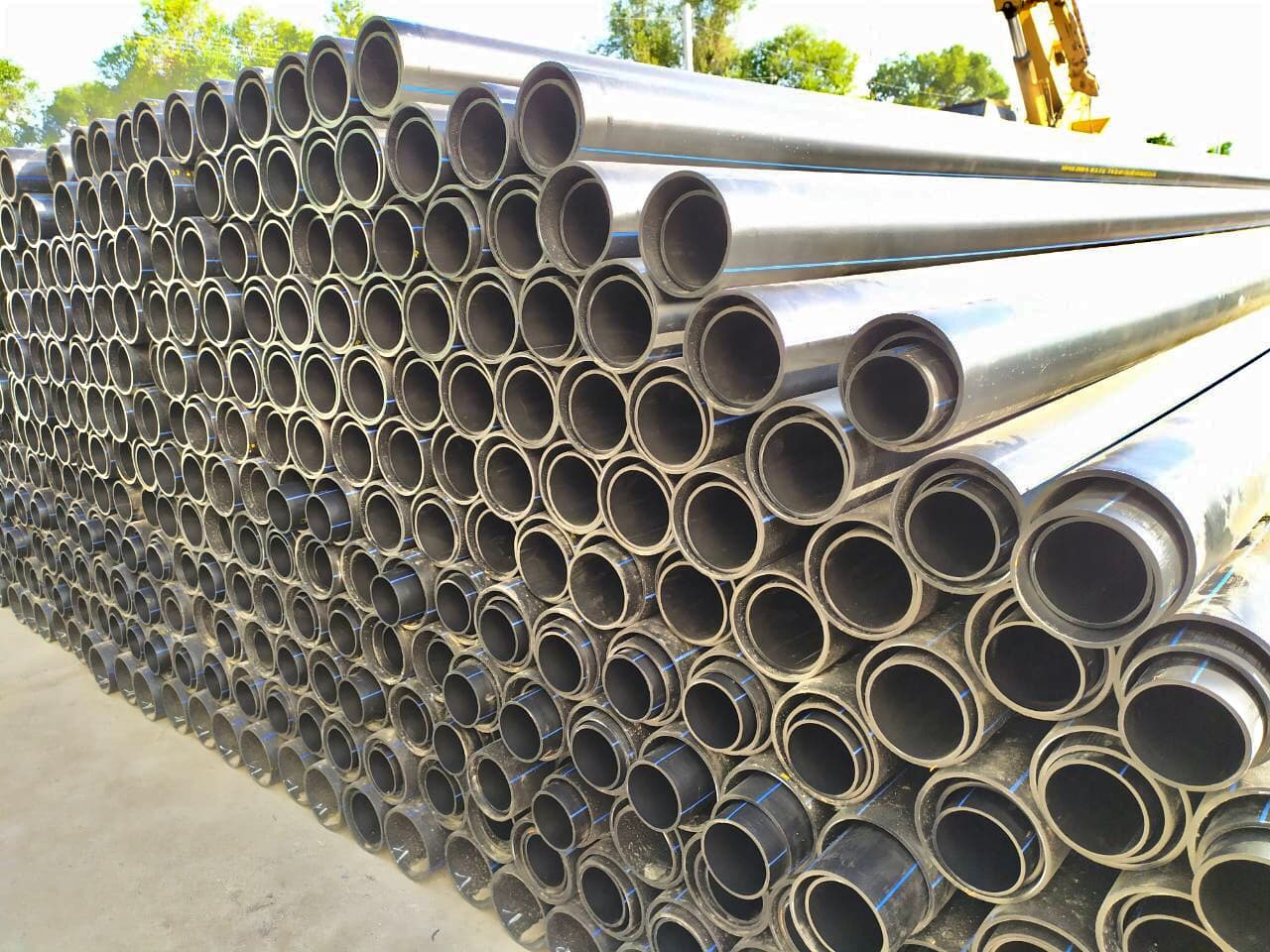
PE100 polyethylene suits an underground water line best: it does not corrode, is flexible and lasts up to 50 years. For a private house, take SDR17 (about 10 atm) or SDR11 (about 16 atm). Lay the pipe below the frost depth on a sand bed, backfill with sand and soil free of stones, and pressure-test it before the trench is fully filled.
Which pipes should you choose for an underground water line?
For underground water, PE100 polyethylene is chosen most often. It does not rust, is not afraid of aggressive soil or groundwater, is flexible and lets the route be laid as one piece without joints. Pipes for drinking and utility water are made to GOST 18599-2001 and marked with a blue stripe; small diameters are supplied in coils of 50–200 m, large ones in straight lengths of 6–12 m.
Steel corrodes underground and needs protection. Polypropylene is rigid and mainly meant for indoor distribution: in a trench you would have to assemble a great many welded joints from it. The SDR class is chosen by pressure: SDR17 — about 10 atm, SDR13.6 — about 12.5 atm, SDR11 — about 16 atm.
How do you lay a water line in the ground: the order of work
A typical trench installation goes like this:
- Draw the route and take existing utilities, fences and trees into account.
- Mark the route with stakes and a cord.
- Dig the trench below the frost depth; make it wide enough to work in.
- Level the bottom, lay a sand bed and compact it.
- Unroll the coil and lay the pipe in a snake pattern with a small extra length.
- Make the joints and the connection into the house.
- Cover the pipe with sand, leaving the joints open.
- Pressure-test the system and fix any leaks.
- Backfill the joints and the trench with soil free of stones and sharp inclusions, laying a warning tape above the pipe.
How deep should a water line be buried?
A water line is buried below the soil freezing depth, which depends on the region. For Almaty it is usually about 1–1.2 m, in northern Kazakhstan up to 2 m and more. For your area, check the depth against the building codes and the design, not general figures.
If you cannot dig deeper (rock, high groundwater, crossings with other utilities), the pipe is insulated along its whole length or a heating cable approved for drinking water is used. With considerable depth or under a driveway, the load on the pipe grows, so the SDR class is checked by calculation: the thicker the wall, the better the pipe resists soil pressure.
Why are a sand bed and stone-free backfill needed?
Polyethylene is flexible, but point loads harm it. A sharp stone or a piece of brick under or over the pipe presses on the wall for years and can leave a scratch or a dent. Scratches deeper than about 10% of the wall thickness are dangerous: they reduce the safety margin.
So the trench bottom is levelled and compacted with a sand bed, and a layer of sand is poured on top. The remaining backfill is soil free of stones, in layers, compacted layer by layer. Warning tape is usually laid above the pipe so that it is noticed before a shovel reaches the pipe. The pipe is laid in a snake pattern because it changes length as it warms and cools.
How do you join the pipes and test the water line?
The joining method depends on diameter. Compression fittings suit small diameters up to 110 mm and household work. Butt welding with a heated tool is used from 63 mm up, electrofusion for any diameter and tight spots. A thread is not cut on the polyethylene pipe itself.
Before the final backfill the system is filled with water, the air is bled out and the pressure is raised above the working pressure. The test pressure and the hold time are set by the design or the codes; if the pressure holds and the joints do not leak, the line is accepted. The test is done with water, not air.
How does installation differ for water, gas and sewer?
The basics are common: trench, bed, backfill. The requirements differ.
- Water: black PE100 pipe with a blue stripe, pressure rated, buried below the frost line.
- Gas: black pipe with yellow marking to ST RK GOST R 50838-2011, SDR11 and thicker. The design and installation of a gas line are done only by the gas service or an authorised organisation.
- Sewer: non-pressure; what matters is holding the fall, not the pressure; more in our article on installing sewer pipes.
Before starting, determine exactly which system is being laid, and do not mix them in one trench without a design.
Frequently asked questions
- Can the pipe be laid without a sand bed?
- It is better not to. If the soil is soft and free of stones, the bed matters less, but in ordinary soil sharp inclusions can damage the wall. Sand under and over the pipe protects it over decades of service.
- Why lay polyethylene pipe in a snake pattern?
- Polyethylene changes length as it warms and cools. A small extra length and smooth bends absorb this change and relieve tension on joints and fittings, so the pipe is not stretched taut like a string.
- Is warning tape needed above a water line?
- It is advisable. It is laid above the backfilled pipe so that during later earthworks it is noticed that a utility runs below before a shovel or bucket reaches the pipe. For water the tape is usually blue; it does not replace the burial depth.
- How do you protect the pipe from freezing if you cannot dig deeper?
- Insulate the pipe along its whole length with polystyrene shells or boards and, if needed, add a heating cable suitable for drinking water. The inlet into the house and crossings are protected especially carefully. The final decision is confirmed by the design for your area.