Plastic Pipes: Types and Uses for Water Supply
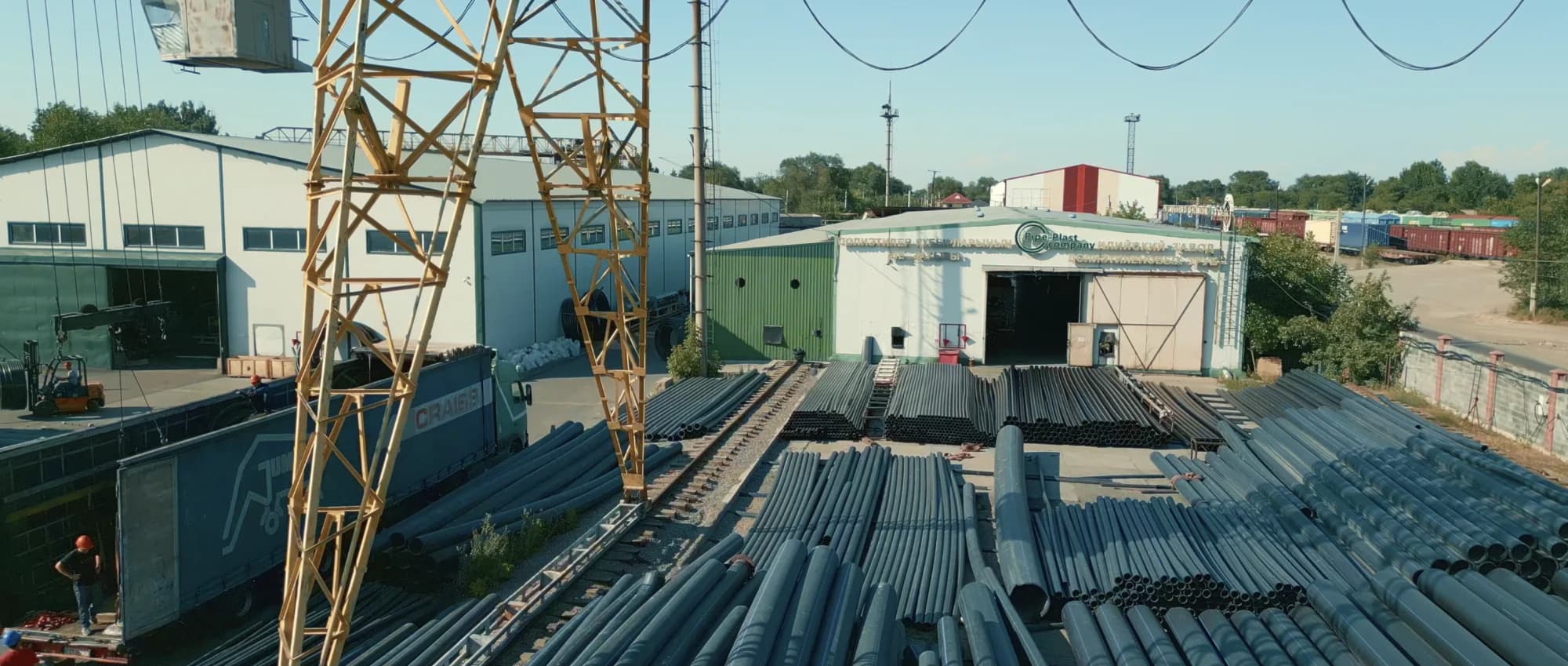
Five main types of plastic pipe are used for water supply and other systems: polyethylene (PE), polypropylene (PP, PPR), PVC, cross-linked polyethylene (PE-X) and metal-plastic. Polyethylene is best for outdoor networks and cold-water service lines, polypropylene and PE-X for indoor distribution and heating, PVC mainly for sewage, and metal-plastic for flexible distribution in a flat. Hot water and heating are not built from PE: it is rated for water up to +40 °C.
What types of plastic pipe are there?
All plastic pipes share freedom from corrosion and light weight, but the materials differ, and the material determines where a pipe can be used:
- polyethylene (PE, HDPE): outdoor water mains, house connections, irrigation networks, underground gas lines; cold water up to +40 °C;
- polypropylene (PP, PPR): indoor cold and hot water distribution, heating (reinforced pipes);
- PVC: sewage, cold-water pressure networks; chlorinated PVC (CPVC) allows hot water;
- cross-linked polyethylene (PE-X): underfloor heating, radiator heating, hot and cold water supply;
- metal-plastic: indoor water distribution and heating where flexibility is needed.
Each is described in more detail below.
Where are polyethylene pipes used?
Polyethylene is flexible, does not corrode, tolerates a single freezing of the water (the pipe stretches) and is supplied in 50–200 m coils or 6–12 m lengths. That is why outdoor water mains, house connections, trunk lines and irrigation networks are built from it. Gas PE pipes (with yellow marking) are laid underground to a design.
Small diameters, up to about 110 mm, are joined with compression fittings, larger ones by welding. Limits: water must not exceed +40 °C, so hot water supply and heating are not made from PE, and gas is not run in PE inside buildings. For a water main, PE100 SDR17 to GOST 18599-2001 is suitable — we manufacture such pipes.
What are polypropylene pipes for?
Polypropylene (PPR) is a rigid material joined by socket fusion (heat welding): the joint is monolithic but permanent. PP is used for indoor cold and hot water distribution and heating. For hot water and heating, reinforced pipes (with fibreglass or aluminium) are chosen to limit thermal expansion.
PP does not bend, so turns are made with elbows and tees. Polypropylene does not replace polyethylene outdoors: for outdoor networks and water service lines, PE is used. These are different materials, and Pipe-Plast makes polyethylene, not polypropylene.
When are PVC and CPVC chosen?
PVC is one of the cheapest and most rigid plastics. It is used above all for sewage, indoor and outdoor, and for cold-water pressure networks. It is joined with solvent cement or with a socket and rubber seal, that is, without heating.
Standard PVC is rated for cold water: at around +60 °C and above it softens, and in hard frost it becomes more brittle and sensitive to impact. Chlorinated PVC (CPVC) exists for hot water, but in homes polypropylene, PE-X or metal-plastic are more often chosen for hot water and heating.
How do PE-X and metal-plastic differ from the rest?
Cross-linked polyethylene (PE-X) is polyethylene whose molecules are bonded to each other. It withstands heating up to +90…95 °C, bends well and holds its shape memory, so it is used for underfloor heating and radiators. For heating, the pipe is coated with an oxygen barrier layer. It is joined with press fittings, axial pressing or compression fittings.
Metal-plastic is a layered pipe: polyethylene, aluminium, polyethylene. It bends, holds its shape and blocks oxygen, but threaded compression joints can loosen over time, so they must stay accessible for tightening.
How do I choose a pipe type for the task?
Guidelines by task:
- outdoor water main and house connection — PE100 with the required SDR;
- water distribution inside the house — polypropylene, PE-X or metal-plastic;
- heating and underfloor heating — PE-X, PE-RT, reinforced polypropylene, metal-plastic;
- sewage — PVC, polypropylene or double-wall corrugated pipes for outdoor networks;
- gas — only polyethylene underground, to a design and installed by the gas service or a licensed organisation.
Materials are often combined within one system: an outdoor network in PE, indoor distribution in another material, with the transition made through threaded or compression fittings.
Frequently asked questions
- Which plastic pipe is best for water supply?
- There is no universal one. Outdoors and underground PE100 is best; indoors, polypropylene, PE-X or metal-plastic. The choice depends on the section of the system, the water temperature, the pressure and the joining method.
- Can pipes made of different plastics be joined?
- Not by welding: PE, PP and PVC do not weld to each other, because they are different materials with different melting temperatures. The transition is made with threaded, compression or flanged fittings suited to both materials.
- Which plastic pipes are suitable for hot water?
- Reinforced polypropylene, PE-X, PE-RT, metal-plastic and CPVC are suitable, and each pipe has its own temperature and pressure limit in its datasheet. HDPE pipes and standard PVC are not suitable for hot water.
- Why are plastic pipes better than steel ones?
- They do not corrode, are lighter, do not clog with deposits and last longer. The drawbacks of plastic are thermal expansion, temperature limits and sensitivity to direct sun in light-coloured pipes.