How to Choose Pipes for Garden and Dacha Irrigation
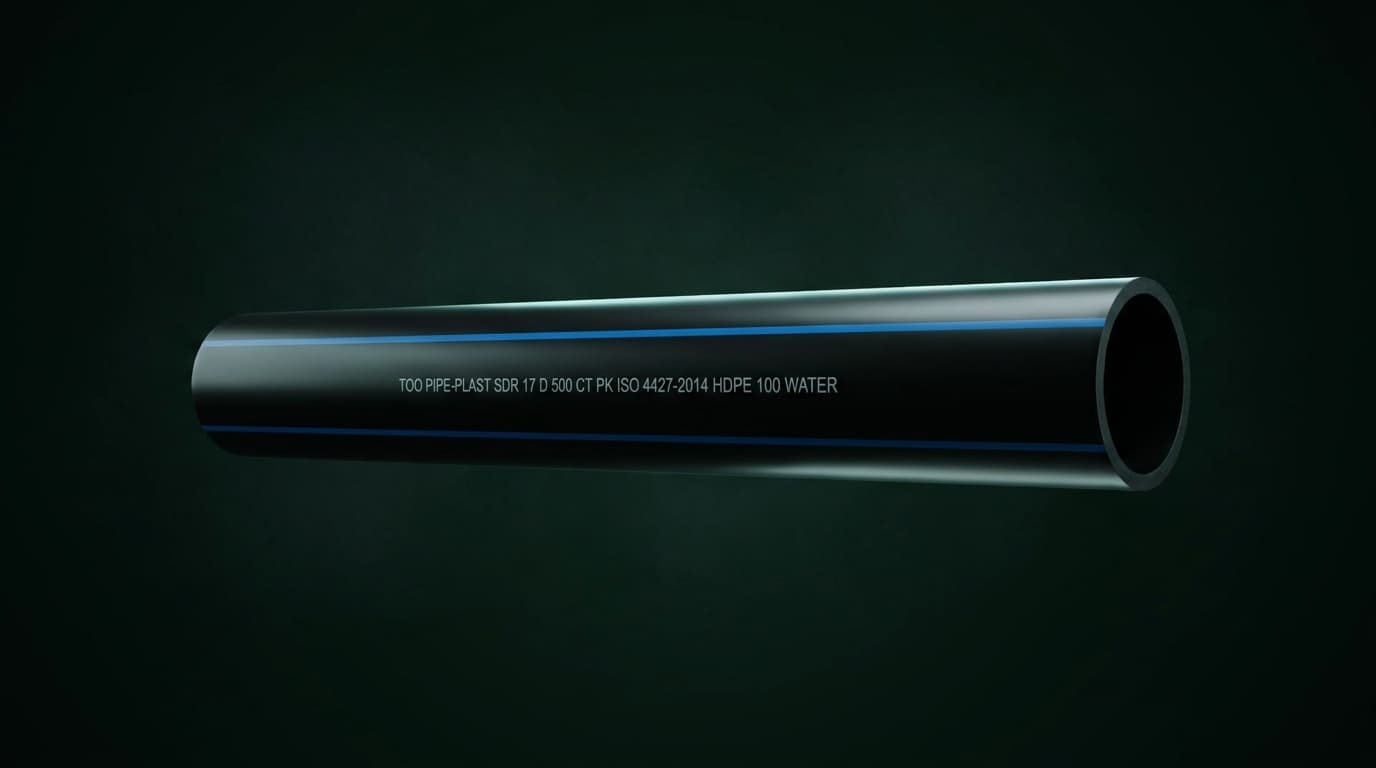
For garden irrigation, a black polyethylene pipe supplied in a coil is the best choice: it is flexible, does not rust and tolerates sunlight. Use 20–32 mm for beds and drip lines and 40–63 mm for the main line from a pump or well. Irrigation pressures are low, so PN10 (SDR17, about 10 atm) is enough. Drain the line before winter.
What determines the choice of irrigation pipe?
First decide on the type of system. Drip irrigation delivers water to the plant root, subsurface irrigation uses a perforated line in the soil, and sprinklers spray it over an area. Sprinklers use a lot of water and part of it evaporates, so they are usually installed on large lawns.
In every case the polyethylene pipe is the supply line: it carries water from the source to the beds, and drip tapes, hoses and sprinklers connect to it through fittings. The line can be laid on the surface for the season or buried 20–30 cm deep. If the pipe stays in the ground over winter, lay it so that the water can be drained completely.
What pipe diameter should you choose for irrigation?
For branch lines to beds and trees, 20, 25 or 32 mm pipe is usually used. As a rough guide at a flow velocity of 1–1.5 m/s: d20 carries about 1 m³/h, d25 about 1.2–1.8 m³/h and d32 about 2–3 m³/h. If the pressure is low or the water comes by gravity from a tank, choose a diameter near the upper end.
For a main line longer than a few dozen metres, running from a well, borehole or pumping station to several branches, you need 40–63 mm: in a thin pipe, pressure losses over the length eat up the head. An oversized pipe is not good either: it costs more, takes longer to fill, and the water still flows along the bottom of the cross-section.
What pressure does the pipe withstand, and what matters for the pump?
Garden pumps and a plot's water supply usually produce 2–6 atm. A PE100 SDR17 pipe (PN10, about 10 atm) is enough for that load. If the pump is powerful, there are height differences, or you connect to a high-pressure main, choose SDR13.6 (about 12.5 atm) or SDR11 (about 16 atm): the wall is thicker and the margin is larger.
Allow for water hammer when a tap or a motorised valve closes suddenly: it can be several times the working pressure. For water, the pipe's nominal pressure applies at a medium temperature up to +40 °C. For irrigation with cold water that is more than enough.
Can an irrigation pipe be left in the ground over winter?
Polyethylene does not become brittle in frost: the material works outdoors at −60 °C. The danger is not the pipe but frozen water. A PE pipe survives a single freeze because it stretches, but repeated freezing shortens its life. So in autumn the line is blown out or drained through its lowest point, and it is laid with a slight fall towards the drain.
Steel and copper pipes lose out for garden irrigation for three reasons: steel rusts, copper is expensive and attracts thieves, and installation is harder. On the surface use black pipe: carbon black protects polyethylene from ultraviolet light. A permanent main is best buried below the frost depth. For Almaty that is usually around 1–1.2 m; check the figure for your area against the codes and the design.
How do you assemble an irrigation line from PE pipe?
For domestic irrigation, compression fittings are most often used because they need no welding. The procedure:
- Mark the route and dig a trench, or lay the pipe out on the surface.
- Unroll the coil in warm weather and let the pipe straighten.
- Cut the pipe square with a pipe cutter and clean the end.
- Slide on the nut and clamping ring, push the pipe in fully and tighten the nut.
- Flush the line with water to wash out sand, and only then connect the drip tape.
- Check the joints under working pressure.
Threads are not cut on the PE pipe itself. PE100 SDR17 pipe to GOST 18599-2001 in coils is suitable for irrigation: we produce such pipes.
Frequently asked questions
- Can I use an ordinary garden hose instead of a pipe?
- For temporary watering you can, but a hose goes stiff in the sun, kinks and does not last. For a permanent system a PE pipe is more reliable: it is rated for pressure and decades of service, and hoses connect to it on short branches.
- How do I connect drip tape to a PE pipe?
- Through a start connector or a tap-in fitting. Drill a hole of the right size in the pipe, insert the connector with its seal and attach the tape. Flush the line first so that sand does not clog the emitters.
- How long does a polyethylene irrigation pipe last?
- The design service life of PE100 under design conditions is 50 years. On the surface in seasonal use, life depends on protection from sun and on the number of freeze cycles. A buried pipe drained for winter lasts longer.
- Does an irrigation pipe need to be approved for drinking water?
- For technical water any pressure PE pipe is enough. But if one line feeds both the house and the garden, use a drinking-water pipe to GOST 18599-2001: it suits both cases.