Which Pipes to Choose for Heating: Materials Compared
For radiator heating, people most often choose reinforced polypropylene (PN20–PN25), cross-linked polyethylene PE-X, multilayer pipe or copper, while steel is used in boiler rooms and on risers. The choice depends on coolant temperature (usually 60–90 °C), system pressure, routing and budget. Ordinary HDPE pipe is not suitable for heating: it is rated for cold water up to +40 °C.
What does a heating pipe have to withstand?
A heating pipe works in the harshest conditions of any household service: constant heat, cyclic temperature swings and a pressure that must not cause leaks for years. So choose by the parameters of the system, not by the price per metre.
What to find out before buying:
- the maximum coolant temperature: for private houses with an autonomous boiler it is usually 60–90 °C;
- the working pressure: usually modest in individual systems and noticeably higher in district networks;
- the routing: exposed, or hidden in a wall or floor;
- thermal expansion: the hotter the water, the more the pipe lengthens and the more compensation it needs;
- oxygen permeability: oxygen can pass through the walls of some plastics into the loop and corrode steel components.
Which materials are used for heating and how do they differ?
- Steel: strong, hardly expands and tolerates any temperature, but it corrodes, is heavy and needs welding or threading.
- Copper: durable and gives off heat well, but expensive and requires soldering.
- Reinforced polypropylene (PP-R, PN20 and PN25): joined by socket fusion, inexpensive, good for exposed runs and boiler rooms, but expands noticeably when heated.
- Cross-linked polyethylene (PE-X, PE-RT): flexible and elastic, suited to concealed runs and underfloor heating, joined with press fittings.
- Multilayer (metal-plastic) pipe: light and flexible, but sensitive to fitting quality and overheating.
- Corrugated stainless steel: bends without losing its cross-section and suits complicated routes, but costs more than plastic.
Always check the maximum temperature and pressure in the data sheet of the specific pipe: they differ between manufacturers.
Which pipes should you choose for water underfloor heating?
An underfloor heating loop is covered with screed, so the pipe must be one continuous length from manifold to manifold, with no joints in the concrete. Flexible pipes supplied in coils work: PE-X, PE-RT, multilayer pipe, as well as copper and corrugated stainless steel. PE-X or PE-RT of 16–20 mm is the most common choice: it is easy to lay, and coils of several hundred metres let you run a loop without a single joint.
Water temperature in a heated floor is usually 35–45 °C, much lower than in radiators. The laying pitch and loop length come from a calculation. If the system contains steel components, choose PE-X or PE-RT with an oxygen barrier.
Polypropylene is not used for floor loops: it is rigid, bends poorly, and every joint in the screed is a potential leak. For more on casting pipes into screed, see our article on water pipes under screed.
Why is HDPE pipe not suitable for heating?
PE100 polyethylene is designed for cold water: the nominal pressure is guaranteed for a medium temperature up to +40 °C. Above that, the permissible pressure drops quickly, the pipe softens and deforms, and its service life shortens. A hot coolant is simply not what this pipe is for.
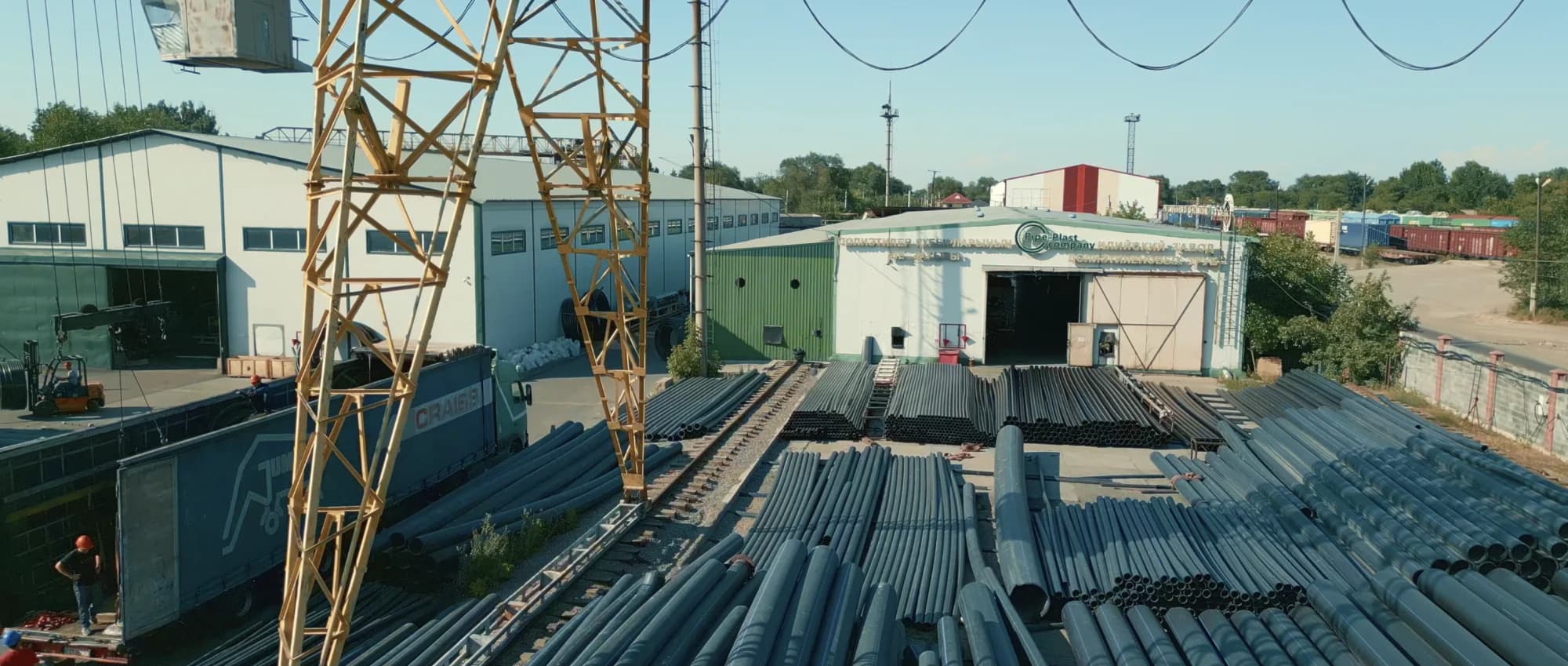
HDPE is an excellent material for other jobs: bringing water into a house, outdoor networks, irrigation and supplying water from a well. Water pipes are made to GOST 18599-2001 from PE100 in classes PN10, PN12.5 and PN16, with a service life of 50 years. These are the pipes we produce at our factory in the Almaty region. The heating loop itself is built from materials designed for heat: PE-X, PE-RT, polypropylene, copper or steel.
How do you match the pipe to your system?
- Find out from the design or the boiler manufacturer the maximum coolant temperature and working pressure.
- Decide how the route will run: exposed on a wall, hidden in a chase, or in the floor screed.
- For exposed runs and the boiler room, consider reinforced polypropylene or steel; for concealed runs and underfloor heating, PE-X, PE-RT or multilayer pipe.
- Allow for expansion: bends, compensation loops and sliding supports.
- Use fittings from the same system and manufacturer as the pipe.
- After installation, pressure-test above the working pressure before closing up the route.
Frequently asked questions
- Can unreinforced polypropylene be used for heating?
- No. Unreinforced PN10 and PN16 pipes are rated for cold and moderately warm water. Heating needs reinforced PN20 or PN25 pipe with an aluminium or glass-fibre layer that reduces expansion, plus a proper calculation of expansion compensation.
- What pipe diameter does a private house need for heating?
- As a guide: 16–20 mm for radiator connections and 25–32 mm for mains and the boiler room. The exact diameter comes from a heat calculation based on boiler output, loop length and the number of radiators, so leave it to a designer or an installation company.
- Do heating pipes need an oxygen barrier?
- Yes, if the system contains steel radiators, a boiler or other metal parts: oxygen passing through the plastic wall causes corrosion. PE-X and PE-RT for heating are made with a protective EVOH layer, so check for it in the pipe marking.
- How long do heating pipes last?
- It depends on the material and the operating regime. Manufacturers state a design life at a given temperature and pressure, and the hotter the coolant, the shorter the life. Steel and copper last decades if properly operated. Check the actual figure in the pipe data sheet and the warranty terms.