How to Transition from a Metal Pipe to a Plastic Pipe
A metal-to-plastic transition is made with a dedicated fitting, not by welding. For polypropylene (PP) use a combination fitting with a metal thread; for polyethylene (PE) use a compression fitting. Never cut a thread into the plastic pipe itself. Small diameters are joined on a thread, assemblies you will need to dismantle go through a union nut, large diameters through a flange. Hot water is for PP only; polyethylene is not suitable for it.
What transition methods are there?
- Combination (threaded) fitting for PP: a plastic end for fusion on one side and a metal thread, internal or external, on the other. Usually used on small diameters, roughly up to 40 mm.
- Compression fitting for PE: one end clamps the plastic pipe, the other is threaded. There are also threadless compression couplings that slide straight onto a plain steel pipe end.
- Union nut: a separable coupling nut. It lets you remove an assembly without cutting the pipe, so it is fitted by meters, filters, radiators and towel rails.
- Flange: for large PE diameters and connections to valves and pumps.
How do you transition from steel pipe to polypropylene?
This is the most common case: an old steel section is replaced, or an appliance is connected to a PP distribution line.
- Shut off the water and drain the section.
- Cut the steel pipe exactly square, remove burrs and clean the end of paint and rust.
- Check the thread on the steel. If it is intact and the wall has not thinned, reuse it; if not, cut a new one on a sound part of the pipe or choose a threadless coupling.
- Wind sealant onto the thread: flax with paste, or PTFE tape, in the direction of the thread.
- Screw in the combination fitting: by hand first, then with a wrench for one or two turns. Over-tightening cracks the plastic part.
- Fuse the polypropylene pipe to the plastic end of the fitting, observing the heating and cooling times from the manufacturer's table.
- Open the water slowly and inspect the joint under working pressure.
How do you join a metal pipe to a polyethylene pipe?
Polyethylene cannot be welded or soldered to metal, so the joint is always mechanical. For water and utility lines, use a compression fitting: the PE pipe goes into a nut with a clamping ring and seal, while the other end screws into a steel coupling or slides over a plain steel pipe. Choose the fitting size by the outside diameter of the PE pipe and by pressure class: for SDR17 (about 10 atm) you need a fitting rated PN10 or higher.
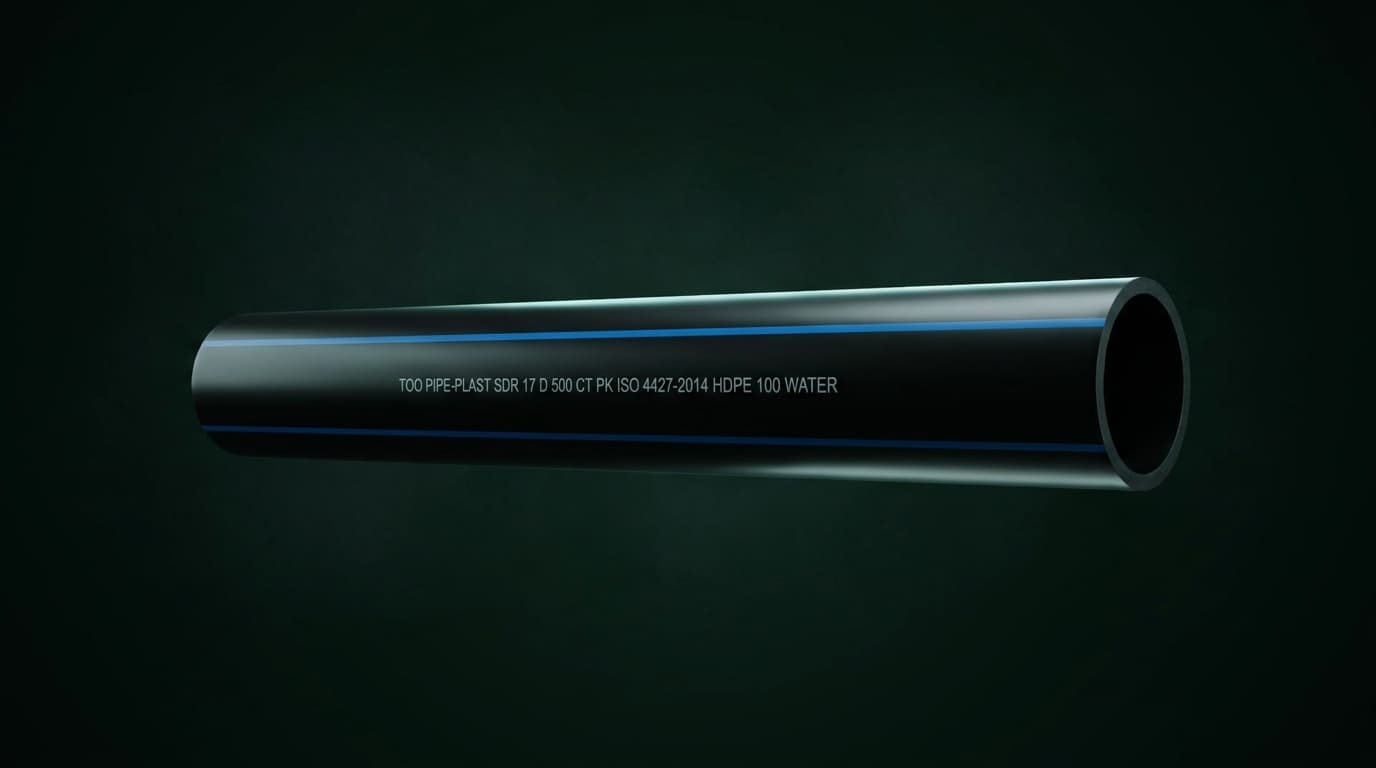
For large diameters and assemblies that must be taken apart, the PE pipe is welded to a flange stub end and bolted to a steel flange. We make PE100 water pipes to GOST 18599-2001 in classes PN10, PN12.5 and PN16; choose a fitting of the same pressure class or higher. A polyethylene-to-steel transition on a gas main is a permanent joint, and only a gas company installs it.
What mistakes are most common?
- A thread cut into the plastic pipe itself: the wall is weakened, and the joint leaks and cracks.
- An over-tightened threaded fitting: the crack in the plastic coupling shows up not at once but after several weeks.
- A fitting that does not match the pressure: a PN10 part installed on a higher-pressure line.
- A PE pipe connected to hot water: it is designed for cold water up to +40 °C.
- Elongation ignored: polypropylene lengthens noticeably when heated, while a steel pipe stays put, so stress builds up at the joint.
- A new thread cut into old steel with a thinned wall: a pinhole leak appears at the thread. A threadless coupling or replacing the section is better.
What should you choose for a new line: PP, PE or metal-plastic?
The material also decides the transition method. Polypropylene is a rigid pipe for internal cold and hot water distribution and heating, joined by fusion. Polyethylene is flexible and used for outdoor mains, house service lines and irrigation with cold water. Metal-plastic is joined to steel with threaded compression or press fittings.
Fittings made for one pipe type do not fit another, so choose them by the pipe material. Polypropylene and polyethylene cannot be welded to each other: they are joined only mechanically, through a compression fitting with a transition.
Frequently asked questions
- Can a polyethylene pipe be welded to a polypropylene pipe?
- No. They are different materials with different melting points and do not form a common weld. PE and PP are joined mechanically: with a compression fitting or a threaded transition selected for both diameters.
- Do I need to check earthing when replacing a steel pipe with plastic?
- Yes. In older buildings a metal water pipe is sometimes used as a path for equipotential bonding. Before replacing a section, ask an electrician whether the earthing relies on the pipe, so that nothing is left unprotected.
- Can this transition be used for hot water?
- With polypropylene, yes, provided the pipe and fitting are rated for the required temperature and pressure. Polyethylene is not used for hot water or heating: its limit is cold water up to +40 °C.
- Does the transition point need to be separable?
- Where the assembly will need servicing, such as at a meter, filter or radiator, yes: fit a union nut. On concealed sections a permanent transition is better, or avoid extra joints altogether.