Can You Embed Pipes in a Wall? Which Pipes Are Suitable
Yes, if the pipe is continuous and the joints are permanent (welded or pressed) or kept out of the wall in accessible places. Suitable for concealed runs are polypropylene PP-R, cross-linked polyethylene PE-X, copper, corrugated stainless steel and PP or PVC drainage pipes. Threaded, collet and compression joints must never be buried. The pipe goes into a sleeve or insulation and is pressure-tested before finishing.
Under what conditions can pipes be embedded in a wall?
Concealed routing is acceptable when you can guarantee three things. First, there are no demountable joints within the wall, because they cannot be reached for tightening. Second, the pipe is shielded from contact with mortar and is free to expand. Third, the system has been pressure-tested before the chase is closed.
Also consider the wall itself. A chase weakens brick or concrete masonry, so in load-bearing walls agree its depth and direction with the design or a structural engineer. Horizontal chases in load-bearing walls are usually restricted. If in doubt, run the pipes in a duct, in a plasterboard partition or in the floor screed.
Which pipes can be hidden in a wall?
- Polypropylene PP-R: joined by fusion welding, so the joints are monolithic. Use reinforced pipe for hot water.
- Cross-linked polyethylene PE-X and PE-RT: flexible, supplied in coils, joined with press fittings.
- Copper: reliable and durable, joined by soldering or press fittings.
- Corrugated stainless steel: absorbs expansion through its corrugations.
- Multilayer (metal-plastic) pipe: acceptable with conditions and only with press fittings.
- PP and PVC drainage pipes: joined with sealed sockets, hidden in ducts or in chases with sound insulation.
In every case the choice depends on what the pipe carries: cold water, hot water or heating.
Which pipes and joints must not be embedded?
- Compression, collet and threaded fittings: they loosen over time with temperature cycling, and cannot be tightened inside a wall.
- Black and galvanised steel without a protective coating: it rusts, and a leak shows as stains on the wall surface.
- Unreinforced polypropylene for hot water: it lengthens and damages the finish.
- Gas pipes: polyethylene gas pipes are not permitted inside a building, and an internal gas line may only be installed by the gas service or a licensed organisation to a design.
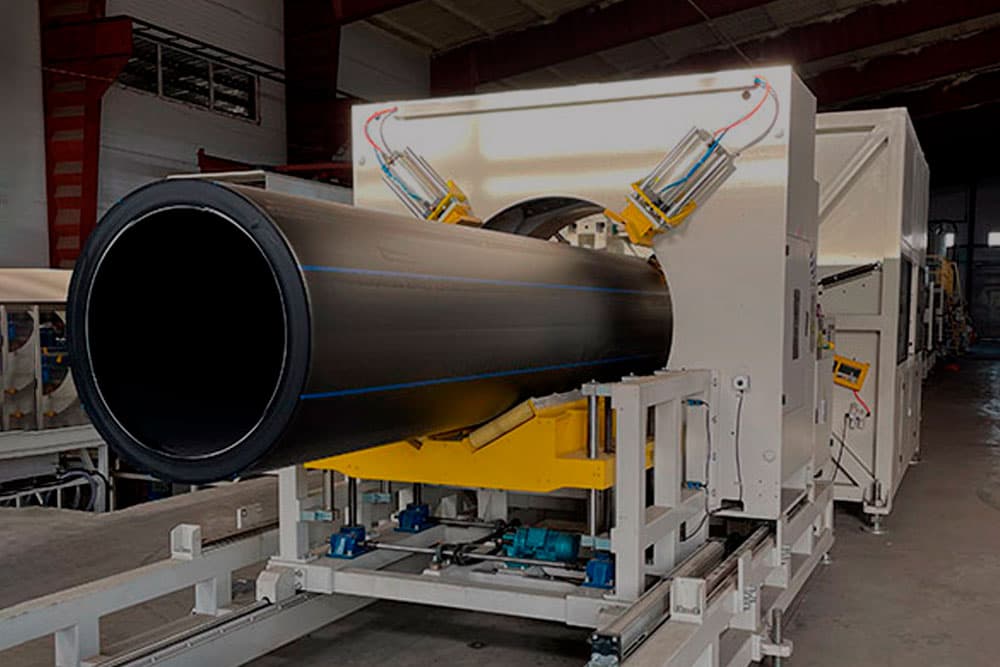
PE100 polyethylene is not normally used for distribution inside a house: it is rigid, and in domestic work it is usually joined with compression fittings, which must not be buried. Its place is the water service and outdoor networks.
How do you protect a pipe in a wall and allow for expansion?
Any plastic pipe lengthens when heated. For polypropylene the rule of thumb is about 0.15 mm per metre per degree: an unreinforced 10 m pipe heated by 40 °C lengthens by roughly 6 cm. A reinforced pipe expands noticeably less, but it still expands.
So a pipe in a chase goes into a protective sleeve or foamed-polyethylene insulation: it leaves room to move and keeps condensation off. Cold and hot pipes are kept apart. The chase is closed with plaster over reinforcing mesh so that cracks do not appear along the route. Remember to leave access to shut-off valves and filters, and keep every demountable joint outside the wall.
What should you do before closing the chase?
- Fix the pipes with clips at the spacing the manufacturer gives, and check they do not touch metal.
- Fit the sleeve or insulation along the whole concealed length.
- Pressure-test above the working pressure (usually 1.5 times) and hold it for the time in the manufacturer's instructions.
- Photograph the route with a tape measure in view and mark the layout on a plan, so you do not drill into a pipe when installing furniture.
- Fill the chase with mortar, keeping the system under pressure until it sets.
- Bring all valves and the manifold out to access hatches.
Frequently asked questions
- Can an HDPE pipe be embedded in a wall?
- The continuous pipe itself can, but only with welded joints. The compression fittings HDPE is usually assembled with must not be buried. Inside houses PE100 is not normally used: it is a pipe for water services and outdoor networks, and polyethylene gas pipes are not permitted in a building.
- Is a sleeve needed when a pipe is embedded in a wall?
- Yes. A sleeve or foamed-polyethylene insulation protects the pipe from mortar, leaves room for expansion when heated and prevents condensation on cold water. Without it the pipe often cracks the finish or leaves it damp.
- Can drainage pipes be embedded?
- Yes, PP and PVC pipes with sealed sockets can be hidden in a wall or duct, usually with sound insulation. Keep the fall, avoid sagging, and bring inspection points out to accessible places so that cleaning does not mean opening the wall.
- How do you find a pipe in a wall later?
- A layout and photographs of the route taken before the chase was closed help. A thermal camera shows hot pipes and a metal detector finds metal and reinforced pipes. Before drilling along a concealed route it is better to use a service detector.