Fixing Sewer Pipes: Clamps, Spacing and Supports
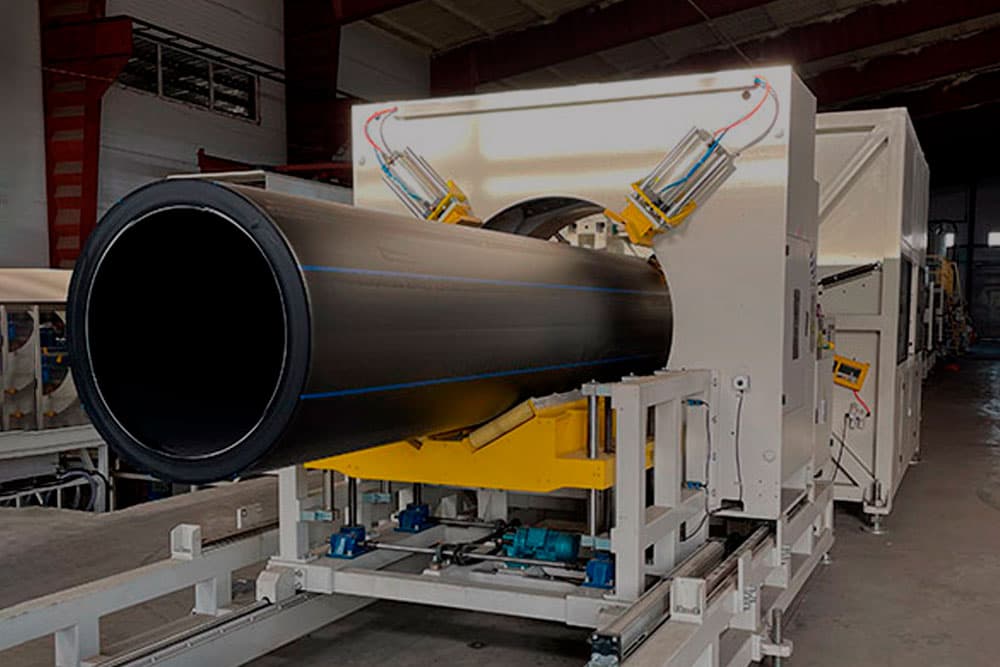
Horizontal sewer pipes are fixed with clamps at a spacing of about 10 pipe diameters: roughly 0.5 m for d50 and 1.1 m for d110. On a stack, a fixed support goes under the socket or at the floor slab, with sliding clamps between them so the pipe can expand. A clamp must not squeeze the pipe. Check the spacing and type of supports in the manufacturer's instructions and the design.
Why do sewer pipes need fixing, and what clamps are there?
Fixing holds the pipe at the right height and slope. Without it pipes sag, waste and solids collect in the sags, joints become loaded and eventually leak, and the pipe transmits vibration and noise to the wall.
Several kinds of fixings are used for sewers:
- metal clamps with a stud, wall plug and rubber lining: the main option for medium and large diameters;
- plastic clips: for small pipes, usually up to 50 mm;
- brackets and hangers: for basements and technical rooms;
- sound-absorbing clamps with a soft lining: where the pipe passes next to a bedroom or living room.
A rubber lining is always needed: it protects the plastic from abrasion and dampens sound.
What spacing do sewer pipe supports need?
For horizontal sections the general guide is about 10 pipe diameters. For a 50 mm pipe that is about 0.5 m, for 110 mm about 1.1 m. This is a guide: the manufacturer's recommendations may be stricter, especially for thin-wall pipes and loaded sections.
Additional rules:
- put a clamp next to every socket and fitting so the joint does not sag;
- at a turn or tee, put a support on both sides;
- on long runs, reduce the spacing if the pipe visibly sags;
- the fixing must not disturb the slope, so check the height of the fixing points with a level.
For stacks the spacing is set by the storey height and the positions of the sockets.
What are fixed and sliding supports?
A plastic pipe changes length when warm waste flows through it. If it is fixed rigidly along its whole length, the joints will be strained and pushed out of the sockets. That is why there are two kinds of supports.
A fixed (anchor) support does not let the pipe move: the clamp is tightened so the pipe does not slide. It is placed under a socket or fitting so the pipe cannot pull out of the joint.
A sliding support only holds the pipe but lets it move along its axis. The clamp is tightened with a little free play, without squeezing the pipe.
Between fixed supports there must be a compensating element, usually the socket itself with its expansion gap. Fixed and sliding supports are alternated according to the manufacturer's scheme.
How do you fix a sewer stack?
Order of work for a vertical run:
- Mark the stack axis with a plumb line or level and choose support positions from the scheme.
- Install a fixed support under the socket of the lower tee or at the floor slab: it carries the weight of the stack.
- Between the fixed supports put sliding clamps with free play so the pipe can expand.
- When passing through a floor slab, use a sleeve and fill the gap with soft material, not rigidly.
- Leave access to the cleanout for rodding.
- Keep the pipe clear of the wall, usually about 5 mm, so it does not rub and transmit vibration.
For tall stacks, it is better to take the support layout from the manufacturer's recommendations.
How do you fix sewer pipes under a ceiling or in a basement?
Under a ceiling and in a basement, hangers and brackets are used. Clamps are fixed with anchors suited to your base: concrete, brick or aerated concrete. Hangers with a strap or a rubber lining are preferable: they let the pipe move slightly and dampen vibration.
Make sure the fixing does not disturb the slope: check the height of each hanger with a level. In a basement, do not fix pipes to unreliable bases such as thin partitions. Keep the distance between hangers the same as for horizontal runs.
For large-diameter pipes and pipes full of waste, the load on the support is higher, so the spacing is reduced. If a pipe runs near a living room, install sound-absorbing clamps.
Frequently asked questions
- Can sewer pipes be fixed with mounting foam?
- No. Foam does not carry the weight of the pipe, does not provide the slope and does not dampen vibration. Use clamps, brackets or hangers with a rubber lining, fixed with screws or anchors into a suitable base.
- Does an outdoor pipe in the ground need fixing?
- It is not fixed with clamps. The base is a sand bed along the whole length on which the pipe lies evenly. Individual support points and stones under the pipe create sags and damage it.
- How do you remove noise from a sewer pipe on a wall?
- Replace ordinary clamps with sound-absorbing ones with a soft lining, leave a small gap from the wall and do not pass rigid contact through the supports. Wrapping the pipe in sound-insulating material also helps.
- What do you fix sewer pipes to a wooden wall with?
- On wood, clamps are fixed with wood screws of suitable length. Choose fixings that do not let the clamp rock, and use sleeves and rubber linings where the pipe passes through structures.