Which Pipes Are Best for a Water Supply
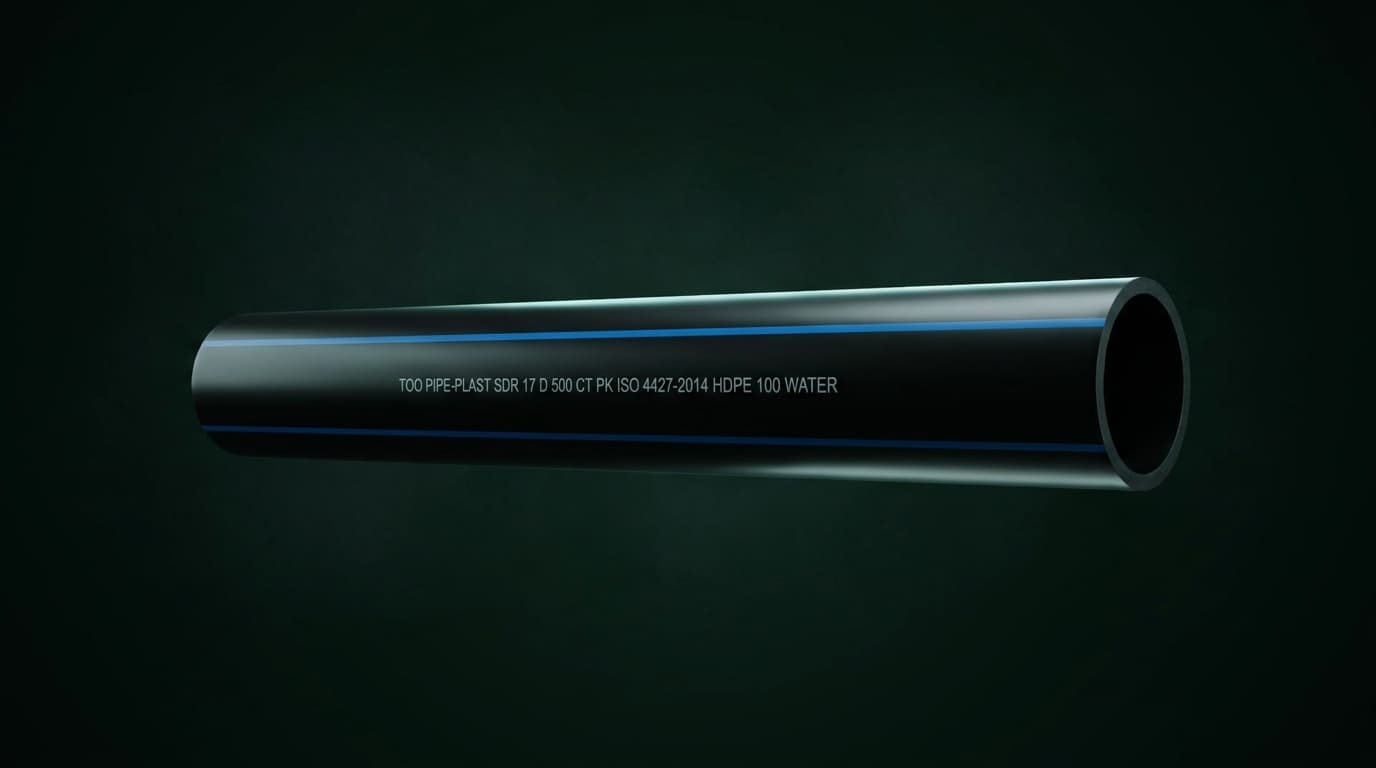
There is no single best pipe for a water supply: the material is chosen for each section of the system. For outdoor and underground water mains, PE100 polyethylene (SDR17, about 10 atm) is best: it does not rust, lasts up to 50 years and comes in coils with few joints. For indoor runs, polypropylene or multilayer pipe suits. Steel is now mostly kept for repairing old networks, and copper is used where service life matters and the cost is acceptable.
Which pipes are best for outdoor and underground water lines?
For the service connection to a house, a plot's water line and street networks, PE100 polyethylene is the most suitable. It does not corrode, does not scale up inside, is flexible, and small diameters come in coils of 50–200 m, so a line can be laid with almost no joints. The nominal pressure is stated for water at +20 °C, with a working limit of +40 °C at reduced pressure; the service life is 50 years.
PE pipe is laid in a trench below the soil frost depth (for Almaty usually around 1–1.2 m; check your area against the codes and the design). Hot water is not run through it. For a water supply, PE100 SDR17 to GOST 18599-2001 is suitable — we produce such pipes.
Which pipes suit indoor distribution?
Inside a house, polypropylene (PPR) or multilayer pipe is most often chosen. They are different materials, and polypropylene is not the same as polyethylene.
Polypropylene is rigid and is joined by socket fusion (diffusion welding), so the joint is monolithic. It is used for cold and hot water, and reinforced pipe is used for hot water and heating. You need a fusion tool and some care.
Multilayer pipe (an aluminium layer between two layers of polyethylene) bends and is installed with press or threaded fittings, without welding. Threaded joints can loosen over time, so they must stay accessible. Check the temperature and pressure rating in the data sheet of the specific pipe.
What about steel, stainless steel and copper?
These are three metals, each with its own pros and cons:
- Steel (galvanised) pipes are cheap and strong, but they corrode, scale up inside, lose flow capacity and need welding or threaded joints. Today they are mostly kept when reconstructing old networks.
- Stainless steel resists corrosion and lasts long, but it is expensive and installation needs professional tools.
- Copper lasts long, tolerates temperature and corrosion and scales less than steel, but it is expensive, is installed by soldering and attracts thieves if pipes lie on an empty plot.
When joining different metals, use proper transition fittings, otherwise electrochemical corrosion is possible.
How do the materials compare on the main parameters?
Compare them on five questions:
- Temperature: PE is for cold water only, up to +40 °C; polypropylene, multilayer, steel and copper also work with hot water.
- Corrosion: PE, PP and multilayer do not rust; steel corrodes; copper and stainless steel resist it.
- Installation: PE in a coil is pulled without joints, PP is fused, multilayer is assembled with a spanner, steel and copper need welding or soldering.
- Service life: PE100 lasts up to 50 years under design conditions; for the others it depends on the quality of pipes and fittings.
- Cost: steel and PP are cheap, multilayer and PE are in the middle, copper and stainless steel cost more.
How do you choose a water supply pipe for your case?
A few practical tips:
- Split the system into sections: outdoor service line, cold water in the house, hot water, heating.
- For the service line and underground runs choose PE100; for hot water, reinforced polypropylene or copper.
- Find out the working pressure in the network and leave a margin in the pipe class.
- Do not mix materials without proper adapters.
- Check markings and certificates: a drinking-water pipe must comply with GOST.
- Do not skimp on fittings: most leaks occur at joints.
- Plan the layout so that demountable joints stay accessible.
- For unusual conditions, such as high pressure, aggressive water or long runs, consult a designer.
Frequently asked questions
- Can a PE pipe be used for hot water?
- No. PE100 for water is rated for cold water: up to +40 °C, with the permissible pressure reduced above +20 °C. For hot water use reinforced polypropylene, multilayer pipe, copper or other pipes designed for hot water supply.
- How does an HDPE pipe differ from a cross-linked polyethylene pipe?
- They are different materials. Cross-linked polyethylene (PEX) allows hot water, while HDPE (PE100) is for cold water and suits pressure outdoor networks. They are joined with different fittings.
- Which pipes are best for a private house or dacha?
- Outdoor service line and plot: PE100 in a coil. Inside the house: polypropylene or multilayer pipe. For a dacha not lived in over winter, it matters that the water can be drained: the line should not freeze full of water repeatedly.
- Can a polyethylene pipe be joined to a steel one?
- Yes, through a transition fitting: a compression fitting with an external or internal thread. No thread is cut on the PE pipe itself: the threaded part is on the metal side of the fitting.