Which Pipes Are Best for Sewers: PVC, PP, PE or Cast Iron
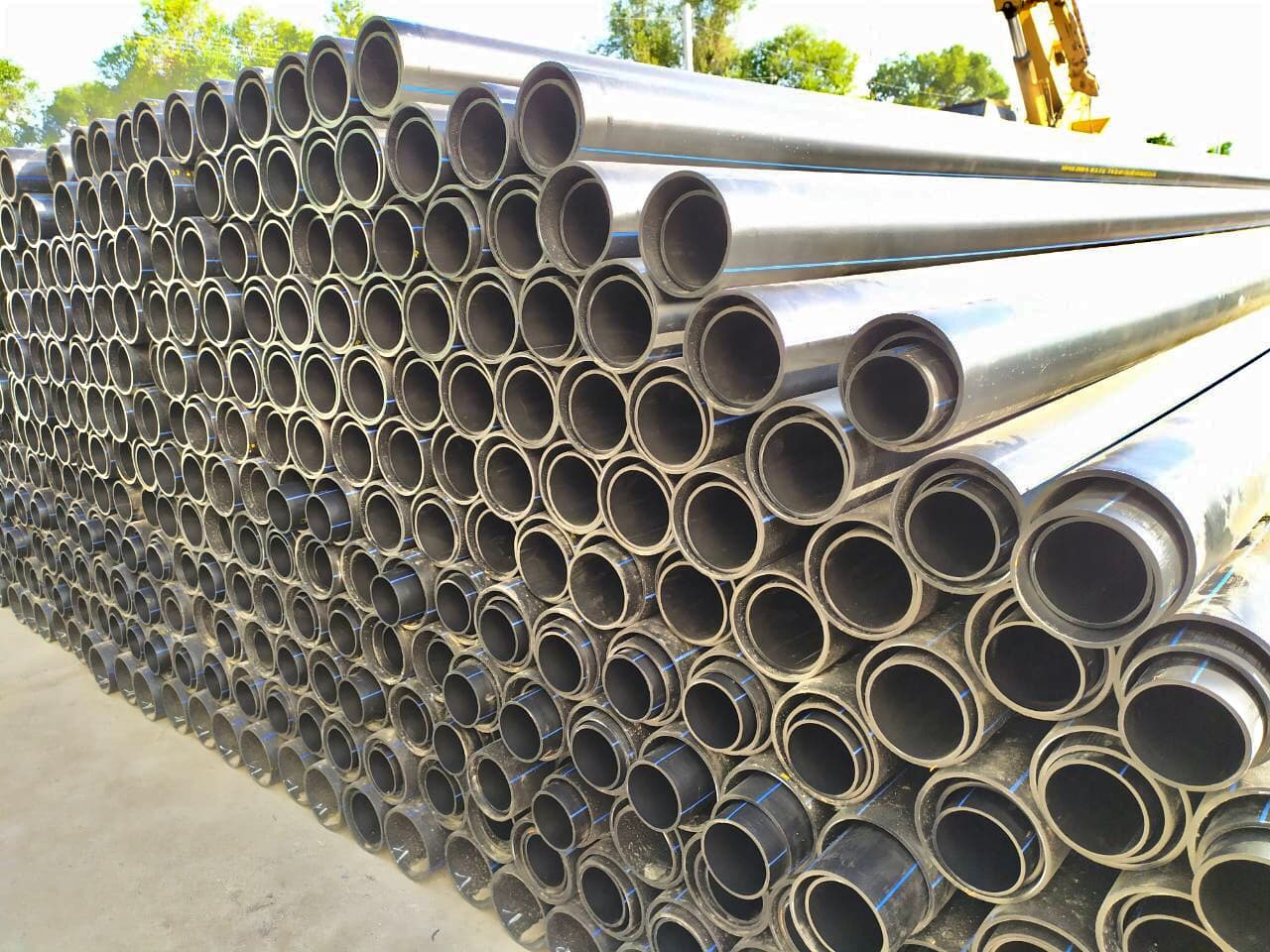
There is no universal "best" pipe; the choice depends on where it goes. Indoors, polypropylene (sound-absorbing) or PVC internal sewer pipes are usual; in the ground, high ring-stiffness pipes: orange PVC SN4 or SN8, or double-wall corrugated polyethylene. Cast iron keeps its place in stacks where fire resistance and quiet matter. The key parameter of an outdoor pipe is ring stiffness SN.
What requirements apply to indoor and outdoor sewer pipes?
Indoor and outdoor sewers work in different conditions, so the requirements for pipes differ too.
Inside a house, pipes do not face soil load or frost, but they take warm and hot waste from the washing machine and dishwasher. Temperature resistance, low noise and ease of installation in tight spaces matter here. Diameters are small and joints are assembled with sockets.
Outdoors the pipe lies in the ground: soil and traffic press on it, and it is exposed to frost and temperature swings. The main parameter is ring stiffness SN: the higher it is, the better the pipe resists flattening. Joints must also stay tight as the soil settles.
A grey internal pipe does not work in the ground: it is not designed for that load.
How do PVC, polypropylene and polyethylene pipes differ?
These are the three most common plastics for non-pressure sewers.
- PVC: a rigid, inexpensive pipe joined by a socket with a rubber ring; common in outdoor networks too (orange high-stiffness pipes). It tolerates hot waste and hard impacts in frost less well.
- Polypropylene (PP): a light pipe for internal sewers, usually with a sound-absorbing wall structure. It tolerates hot waste better than PVC, so it is often used in houses with a washing machine and dishwasher.
- Polyethylene (PE): a flexible material resistant to impact and frost that does not corrode. In sewers it is used for outdoor double-wall corrugated pipes and for pressure lines, where pipes are welded together.
None of the three corrodes or scales over like metal.
Which pipe should you choose for an outdoor sewer?
For an outdoor network, ring stiffness SN and diameter matter most. For a private house without heavy loads, SN4 is usually taken; for greater depth, under a driveway or in weak soils, SN8 and above. Orange PVC pipes for outdoor sewers and double-wall corrugated pipes of polyethylene or polypropylene are suitable: they have a smooth inner layer and a rigid ribbed shell.
Outdoor pipes are joined with a socket and a sealing ring. A section under a road or car park requires greater stiffness and protection, and the choice is confirmed by calculation.
To find out which diameter a line needs, read our article on choosing the diameter of sewer pipes, and for depth, the article on burial depth.
What about cast iron, concrete and other materials?
Cast-iron pipes were installed in stacks for decades: they are non-combustible, quiet and last a long time. The downsides are weight, price, laborious installation and corrosion: over time the inner surface scales up. Today cast iron is more often found in older houses and in high-rises where fire resistance matters.
Concrete and reinforced concrete pipes are used on large collectors and industrial sites: they withstand heavy loads, but they are heavy, are installed with special equipment and have a rough inner surface. They are not needed for a private house.
Asbestos-cement pipes were once used in non-pressure networks, but they are brittle and tolerate chemicals poorly, and today they are usually not chosen for new installation.
For a private house the choice lies mainly between PVC, PP and corrugated PE.
How do you avoid mistakes when buying sewer pipes?
Check the marking, not the colour. A quality pipe states the outside diameter, wall thickness or ring stiffness class SN, the standard, the manufacturer and the date. Colour alone is no guarantee: an orange pipe with no SN marking is not suitable for loads.
- Buy pipes, fittings and seals from one manufacturer.
- For the ground choose SN4 and above, not grey internal pipes.
- Check the sockets and ends for damage: chips and cracks are not acceptable.
- Ask for a certificate or data sheet for the batch.
- Compare not the price per metre but the stiffness and wall: a thin pipe without marking can be crushed by hand.
If in doubt, check your choice against the design or the installation contractor.
Frequently asked questions
- Can a pressure polyethylene pipe be used for a sewer?
- For a gravity sewer of a private house it is not usually chosen: sockets and SN stiffness are needed. But for a pressure sewer with a pumping station, PE100 pressure polyethylene pipes are used, joined by welding.
- Can a grey internal sewer pipe be buried in the ground?
- No. Grey pipes are designed for indoor installation without soil load or frost. In the ground they can flatten or crack. For the ground use orange SN4 and SN8 pipes or double-wall corrugated pipe.
- Which sewer pipes are the quietest?
- The quietest are sound-absorbing polypropylene pipes and cast iron. Noise can be reduced further with rubber-lined clamps, smooth turns made of two 45° bends and no abrupt drops in height.
- Does a private house need cast iron?
- Usually not. For a private house PP or PVC indoors and SN4–SN8 pipes outdoors are sufficient. Cast iron is justified where fire resistance and quiet are needed, for example in stacks of multi-storey buildings.