How to Choose the Diameter of Sewer Pipes
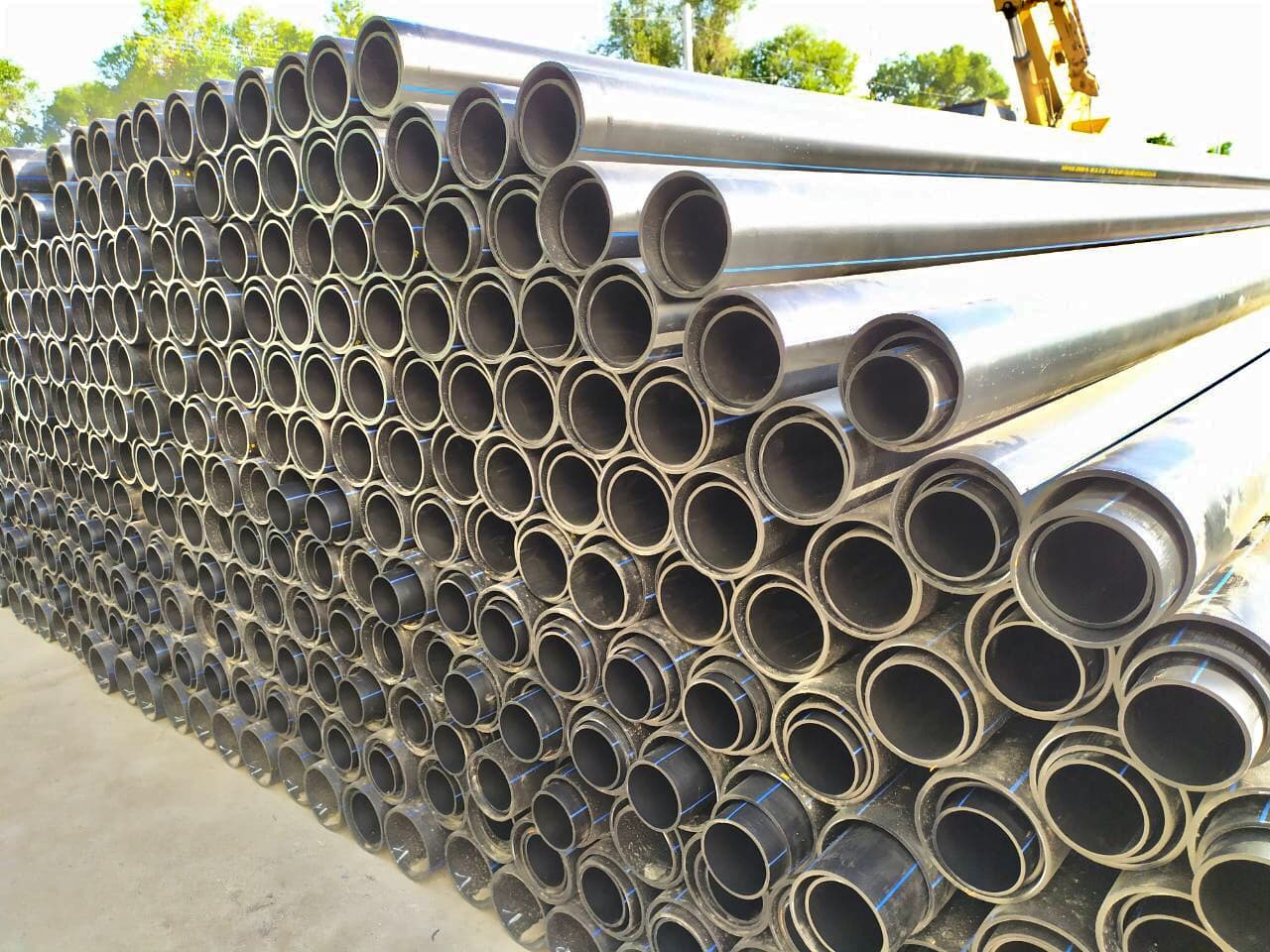
Choose the sewer pipe diameter by the fixture it serves and the length of the run. Typical guides: 50 mm for a sink, kitchen sink, bath and shower; 110 mm for a toilet, stack and house outlet; 160 mm for a long outdoor run or a shared line from several houses. Never reduce the diameter along the flow. The larger the diameter, the smaller the slope required. Final values are set by the design.
What does the choice of sewer pipe diameter depend on?
A private-house sewer is non-pressure: waste flows by gravity, the pipe runs partly full, and water and solids slide along its lower part. The diameter is therefore chosen by three criteria.
The first is the fixture type and the nature of the waste. A toilet needs a pipe where paper and solids will not get stuck; a sink needs a smaller section. The second is the number of fixtures on the section: the more users on one line, the larger the diameter. The third is the length and slope of the run: on a long outdoor line a larger pipe is used so the capacity reserve does not depend on every single blockage.
The main rule: the diameter is never reduced along the flow. A restriction creates a blockage point.
What diameter is needed for each section?
Typical guides for a private house:
- sink, kitchen sink, washbasin, shower, bath, washing machine and dishwasher: 50 mm;
- toilet: 110 mm;
- the common stack in the house: 110 mm;
- the house outlet and outdoor line to the septic tank: 110 mm;
- a long outdoor line or a shared branch from several houses: 160 mm;
- a village-scale collector: 160–200 mm and more, by calculation.
These are guides. If you have many fixtures, a complex layout or non-standard plumbing, the diameters are confirmed by the design and current norms.
Why is exactly 110 mm connected to a toilet?
A toilet discharges paper and solids that must leave without stopping. In a smaller pipe they catch on joints and irregularities, and blockages occur regularly. This is why 110 mm is used for the toilet and the common stack.
Wall-hung toilets of European make sometimes have a smaller outlet, for example 90 mm. That is no reason to reduce the pipe: the transition to 110 mm is made right after the fixture, and 110 mm continues along the run. Never put a smaller pipe after a larger one, even if the flow is small.
A 50 mm branch from a sink or bath is connected to a 110 mm stack through a reducing tee.
How is diameter related to slope?
The larger the diameter, the smaller the slope required, and vice versa. Typical values for non-pressure sewers: about 3 cm per metre for a 50 mm pipe, about 2 cm per metre for 110 mm and about 0.8 cm per metre for 160 mm. These are commonly used guides: final figures come from the design and norms.
Breaking this relationship is risky. Too little slope leads to stagnation; too much leaves solids in the pipe while the water runs away. How to set the depth of the line taking slope and frost into account is covered in detail in our article on the burial depth of sewer pipes.
How do you choose the diameter of an outdoor sewer?
For one house with an ordinary set of fixtures, the outdoor line from the outlet to the septic tank is usually laid with 110 mm pipe. 160 mm is chosen when the line is long, several houses discharge into it, or a capacity reserve is needed.
Watch the designation. For plastic sewer pipes the outside diameter is stated: "110" means the outer size, and the inner size is smaller by twice the wall thickness. Steel and cast-iron pipes state a nominal bore DN, which is not equal to the outside diameter. When changing material, select adapters from the data sheet rather than by eye.
A separate parameter of an outdoor pipe is ring stiffness SN: it depends on depth and load and is chosen independently of diameter.
Frequently asked questions
- Can a toilet be connected with a 50 mm pipe?
- No. A toilet needs a diameter of at least 110 mm: paper and solid waste pass through it. A 50 mm pipe is suitable only for a sink, kitchen sink, bath, shower and household appliances.
- Is it better to take 160 mm pipe for a house as a reserve?
- No. With a small water flow, the stream spreads out in an over-wide pipe, the velocity drops and solids stay in the pipe. For an ordinary private house 110 mm is sufficient.
- How do you connect 50 mm and 110 mm pipes?
- A 50 mm branch is connected to a 110 mm line through a tee with a 50 mm branch or a 110×50 wye. The connection is made in the direction of flow, at 45° or into the stack.
- Why is the pipe's inner size smaller than the marking says?
- The marking shows the outside diameter. The inner diameter is smaller by twice the wall thickness. For sewers this is taken into account when selecting: SN and wall thickness affect the actual cross-section.