How to Fix a Leak in a Plastic Pipe: PE, PP and PVC
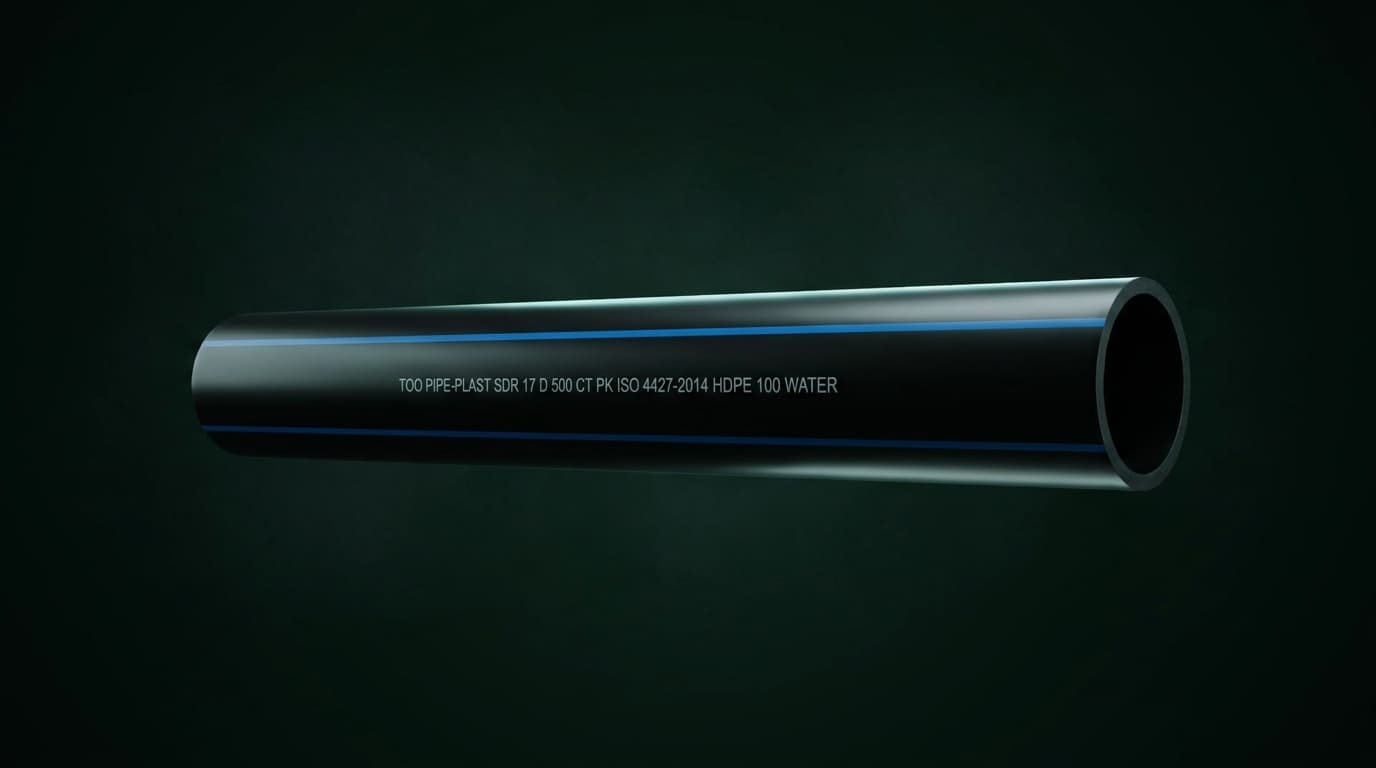
First shut off the water and find where it leaks: at a joint or in the pipe body. A repair clamp with a rubber gasket stops a leak temporarily. Only replacing the damaged section fixes it reliably: on polyethylene you cut out the damaged piece and fit compression or electrofusion couplings, on polypropylene you fit welded (socket-fused) couplings. If a pressurised main leaks, or the pipe is buried or inside a wall, call a professional.
What should you do in the first minutes when a pipe starts leaking?
- Close the valve upstream of the leak or at the main inlet, then open the lowest tap to relieve pressure.
- Switch off the power on that circuit if water reached wiring, sockets or appliances.
- Put a container under the leak and clear water from the floor so it does not reach neighbours below.
- Wipe the pipe and joint dry and wait a minute: you will see where the first drop appears.
- Identify the type of damage: the joint (fitting, welded or glued) is wet, or the pipe body itself. All further repair depends on this.
Why does a joint leak and how do you find the cause?
The type of joint hints at the cause. On a compression fitting the clamping nut has usually loosened, or the pipe was cut unevenly, not cleaned, or not pushed in fully: tighten the nut, and if that does not help, take the fitting apart and check the seal. On a welded polypropylene joint the cause is usually a wrong welding regime: overheating or underheating, misalignment, too little time to cool. Such a joint cannot be tightened or smeared with sealant, it must be cut out. On glued PVC joints the leak appears if the glue was applied thinly or water was turned on before it set. A cause that is often missed is stress: the pipe is clamped in a wall and pulls on the fitting when it heats up or vibrates.
What can you use to stop a leak temporarily?
A temporary measure is to buy time until materials or a plumber arrive, not something to live with for years.
- Repair clamp: a steel band with a rubber gasket, matched to the pipe's outside diameter. The gasket must cover the leak with margin on both sides, and the bolts are tightened evenly.
- Self-amalgamating (silicone) tape: wound with overlap and tension on a dry, degreased pipe. Suitable at low pressure.
- Epoxy putty or cold weld: acceptable on PP and PVC, but holds poorly on polyethylene.
Check any clamp or wrap straight after turning the water on and again the next day: the gasket settles.
How to fix the leak permanently: polyethylene and polypropylene
There is only one reliable method: replace the damaged section. A polyethylene (PE) pipe is cut square with a pipe cutter, the damaged piece is cut out with a margin, and a new insert is fitted on two compression couplings. If the pipe cannot move, or it is a buried main, use electrofusion welding. A polypropylene (PP) pipe is cut out the same way, but the new insert is joined with socket-fusion couplings: a PP welding iron and heat fusion. An important point: PE and PP cannot be welded to each other, so a threaded or compression fitting is used for a transition between them. PVC is solvent-welded with the proper cement and left for the time the manufacturer specifies. After the repair, open the water slowly and bleed the air.
When should you call a professional?
An accessible interior pipe or a garden water line can be repaired yourself with the water off. Call a professional if:
- a pressurised main leaks, or the pipe is hidden in a wall, screed or ground;
- the leak returns after repair, meaning the cause is the installation or operating conditions, not a single joint;
- water has reached electrical wiring;
- the pipe is large in diameter, or the leak is at a welded main joint;
- the pipe is deformed, bulging or darkened: this is overheating or wear and the whole section should be replaced.
If the pipe carries gas, do not repair it yourself: close the valve and call the gas service. Work on a gas pipeline is done only by an authorised organisation. For water supply, PE100 SDR17 to GOST 18599-2001 is a suitable choice, and we manufacture such pipes.
Frequently asked questions
- Can you seal a leak in a plastic pipe with glue or sealant?
- Only as a very short-term measure. Glue barely holds on polyethylene, and on polypropylene and PVC it holds slightly better, but under pressure the patch comes off. It is more reliable to fit a clamp for a day or two and then replace the section.
- What to do if a pipe leaks after freezing?
- Shut off the water, drain what remains and inspect the pipe. Polyethylene tolerates a single freeze because it stretches, but cracks and deformation are still possible. Replace the damaged section entirely and insulate the pipe so the water does not freeze again.
- Do you need to test the pipe after repair?
- Yes. Open the water slowly, bleed the air at a tap, and check the joint at working pressure with a dry tissue under it. Check again after a day. For large mains, pressure testing is carried out by the installing contractor.
- Why does a new fitting leak right after installation?
- Typical causes: an uneven cut, no chamfer, the pipe not pushed in fully, an under-tightened nut, misalignment while welding, or too little time for the glue to set. Take a compression joint apart and reassemble it; cut out a welded joint and redo it.