What Polyethylene Pipe Fears: Heat, Fire, Stones and Ice
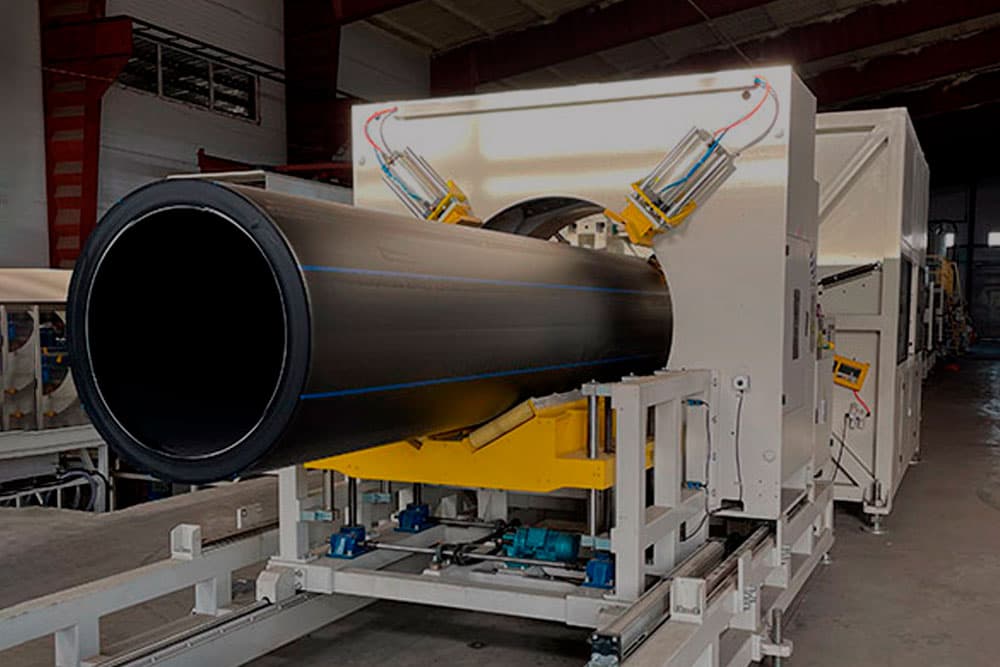
A polyethylene pipe fears overheating above the permitted temperature (for water, up to +40 °C, with the permissible pressure reduced above +20 °C), open flame, sharp stones and point loads in the backfill, scratches deeper than about 10 % of the wall, repeated freezing of water, ultraviolet for light-coloured pipes and bending below the minimum radius. Rust, chemicals and frost down to −60 °C it tolerates. If the rules are followed, the pipe lasts 50 years.
Why is heat dangerous?
The strength of polyethylene depends on temperature: the warmer it is, the lower the permissible pressure. The nominal pressure of the pipe is stated for water at +20 °C; up to +40 °C the pipe is used with a reduced permissible pressure. At higher temperatures the wall softens, pressure must be reduced, and on hot water the pipe works only briefly and deforms. That is why HDPE pipes are not used for heating or hot water.
Water is not the only source of heat. A black surface in the sun, a neighbouring hot pipe or stove, or laying next to a heating main give the same effect. Keep the polyethylene line away from heat sources and protect it with thermal insulation. If a pipe works at its limit of temperature or pressure it has no margin left, and its life shortens noticeably.
What do fire and chemicals do to polyethylene?
Fire. Polyethylene burns and melts, dripping burning drops, so open flame, a blowtorch and welding next to a pipe are unacceptable: when working near a laid line, shield it with a non-combustible screen. A pipe must not be heated with fire to bend it.
Chemicals. Polyethylene is resistant to most acids, alkalis and salts: that is why it does not corrode in the ground. But strong oxidisers such as concentrated nitric acid harm it, and solvents and fuel (petrol, diesel) cause swelling and can permeate the wall. That is why a water line is not laid in ground contaminated with oil products without a protective sleeve.
Why are stones, scratches and impact dangerous?
Polyethylene does not tear under ordinary loads but is sensitive to stress concentration at a single point. A stone pressing on the pipe wall, under the load of soil and traffic, gradually pushes in, and failure starts at that spot.
- The bedding under the pipe and the backfill around it must be sand or fine soil without stones, crushed rock or bits of brick.
- A scratch deeper than about 10 % of the wall thickness is considered dangerous: such a section is cut out and replaced, not wrapped with tape.
- Do not drag the pipe over sharp surfaces or throw it onto a hard base, especially in frost.
Surface scratches from ordinary laying are tolerated by the pipe without problems.
What do freezing, sun and water hammer do?
Freezing. A pipe usually survives a single freeze of water: it stretches and returns to size. But repeated freeze–thaw cycles tire the material, and fittings and taps fail before the pipe.
Ultraviolet. A black pipe is protected by carbon black and does not degrade in the sun. Light-coloured and coloured pipes without a stabiliser age and become brittle.
Water hammer. Slamming taps shut or starting a pump without a soft start produces a pressure spike that can exceed the design value. For a line with a pump, choose SDR with a margin: for water usually PE100 SDR17, and for increased loads SDR13.6 or SDR11 to GOST 18599-2001 — we manufacture such pipes.
What happens if a pipe is bent incorrectly?
Polyethylene is flexible, but not infinitely. If the radius is too small, a kink with a whitish mark forms on the inner side of the bend, the wall weakens there and the bore narrows. The permissible bend radius depends on diameter, SDR and temperature: as a guide for cold laying, not less than 20–25 outside diameters; check the manufacturer's recommendations for exact values. In frost the radius must be increased.
If a tighter turn is needed, fit an elbow or fitting rather than bending the pipe. A kinked section is replaced: it must not be heated and straightened, as the wall there is already weakened.
Frequently asked questions
- How long does a polyethylene pipe last if it is not damaged?
- The design service life of PE100 water pipes is 50 years under the conditions the pipe is rated for: temperature up to +40 °C, pressure not above nominal, no mechanical damage. The actual life depends on installation and operation.
- Does a polyethylene pipe fear acids and alkalis?
- Most weak and medium solutions, no. Strong oxidisers, concentrated acids, organic solvents and fuel are dangerous. For aggressive media, check the manufacturer's chemical resistance tables.
- Can a deep scratch on a pipe be repaired?
- No, it cannot be glued or smeared over. The damaged section is cut out and a new piece fitted on couplers: electrofusion couplers or, for small diameters, compression ones. Minor surface scratches can be left.
- Will the pipe survive boiling or hot shower water?
- No. For HDPE pipes the water limit is +40 °C (above +20 °C with reduced pressure), and on hot water they deform. Hot water and heating need other materials: PE-X, metal-plastic, reinforced polypropylene.