01
Co-extruded two-layer, gas
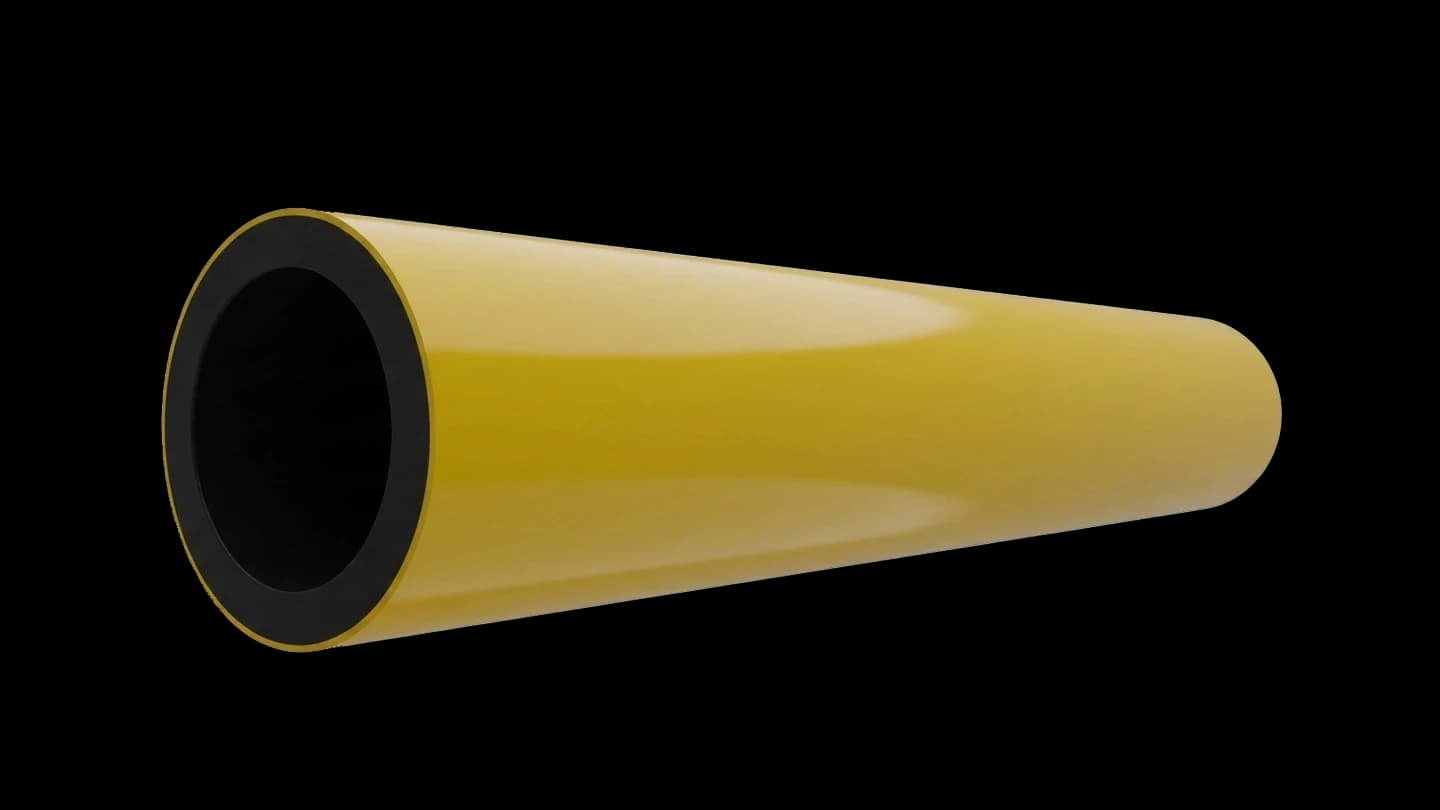
black PE100 · yellow PE100-RC skin
The skin marks the line as gas and absorbs the impacts and scratches of installation.
Two-layer pressure pipes for water and gas: a PE100 load-bearing wall and a PE100-RC protective skin, formed in a single extrusion pass.
Need another diameter, class or coil supply? Request a quote →
The layers form together in the hot melt during extrusion, so there is no bond line to delaminate. The two-layer build carries a protective outer skin; the three-layer build adds an inner one. Diameters 200–630 mm, for water and for gas.
black PE100 · yellow PE100-RC skin
The skin marks the line as gas and absorbs the impacts and scratches of installation.
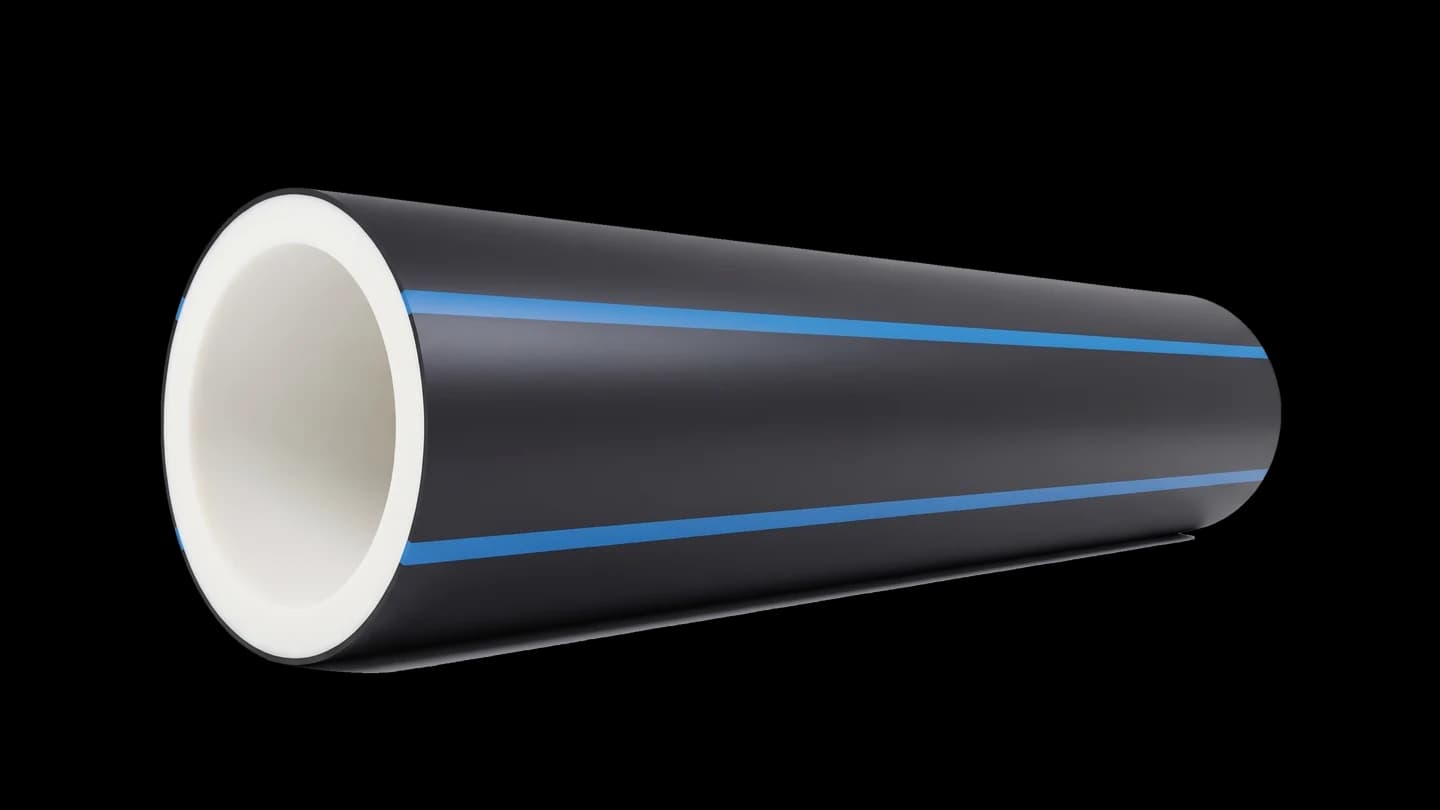
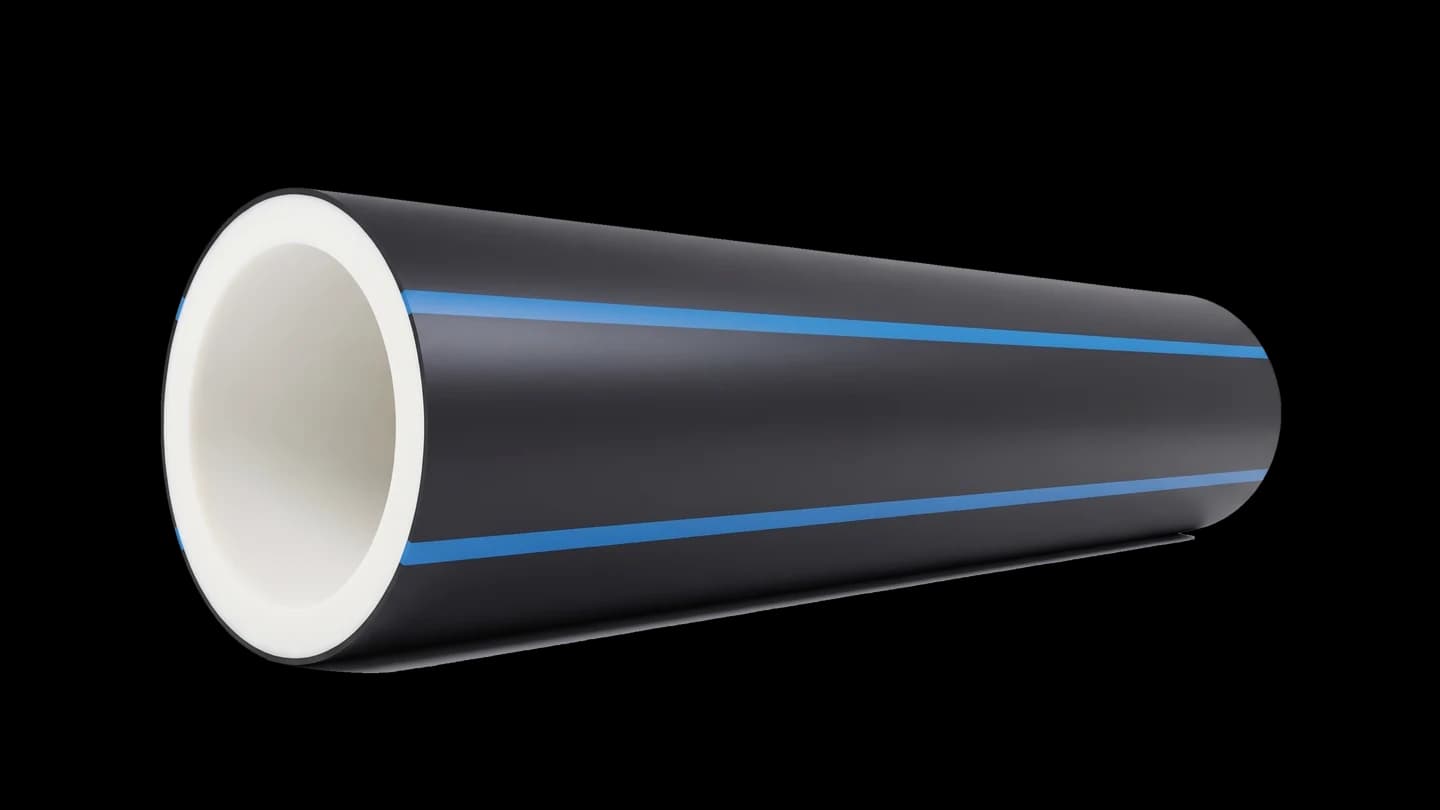
white PE100 inner layer · black wall
The white inner layer shows on the cut face — direct proof the stock is virgin, since recycled material is always black.
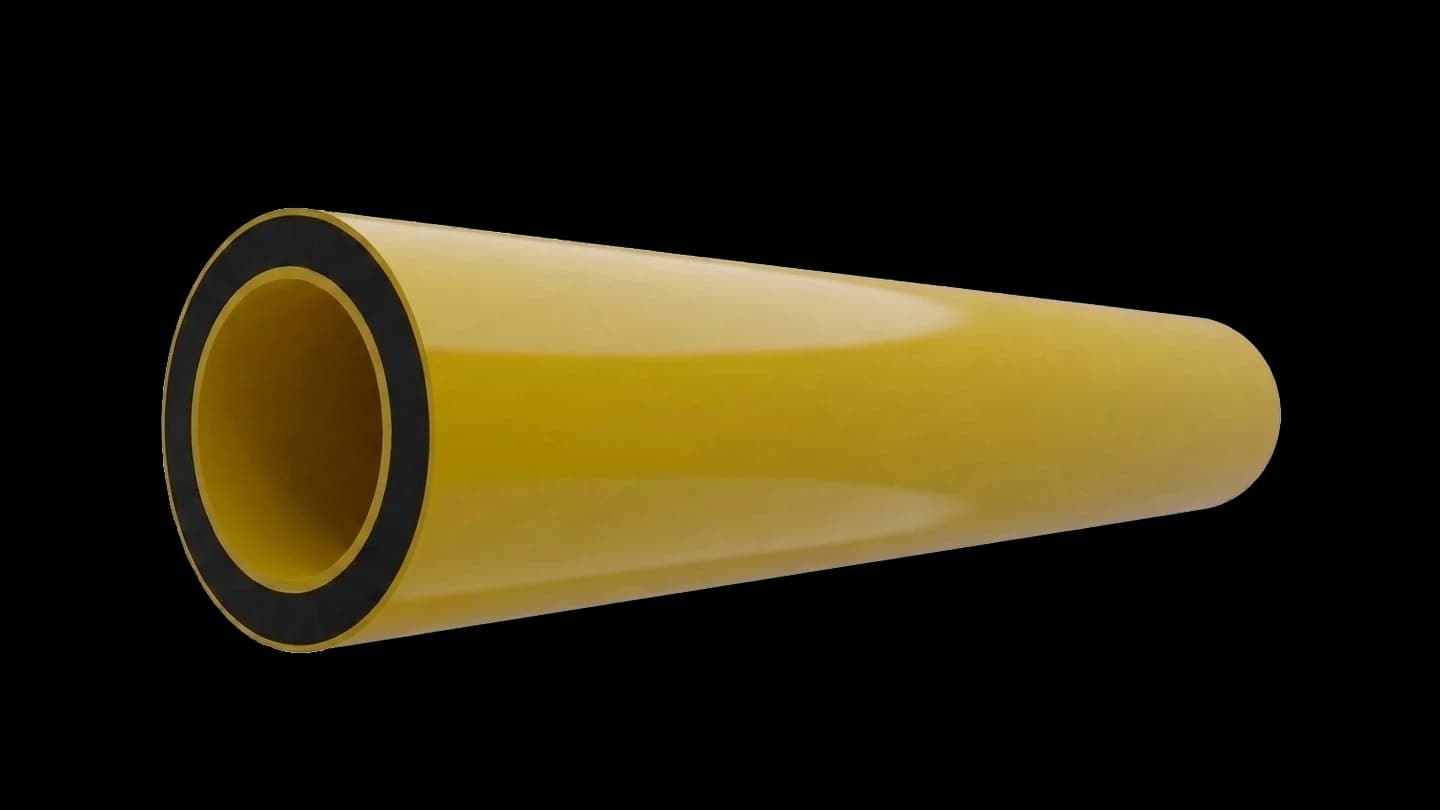
yellow skin · black PE100 · yellow inner layer
Colour outside and in, so the pipe reads as gas from either side of the cut.
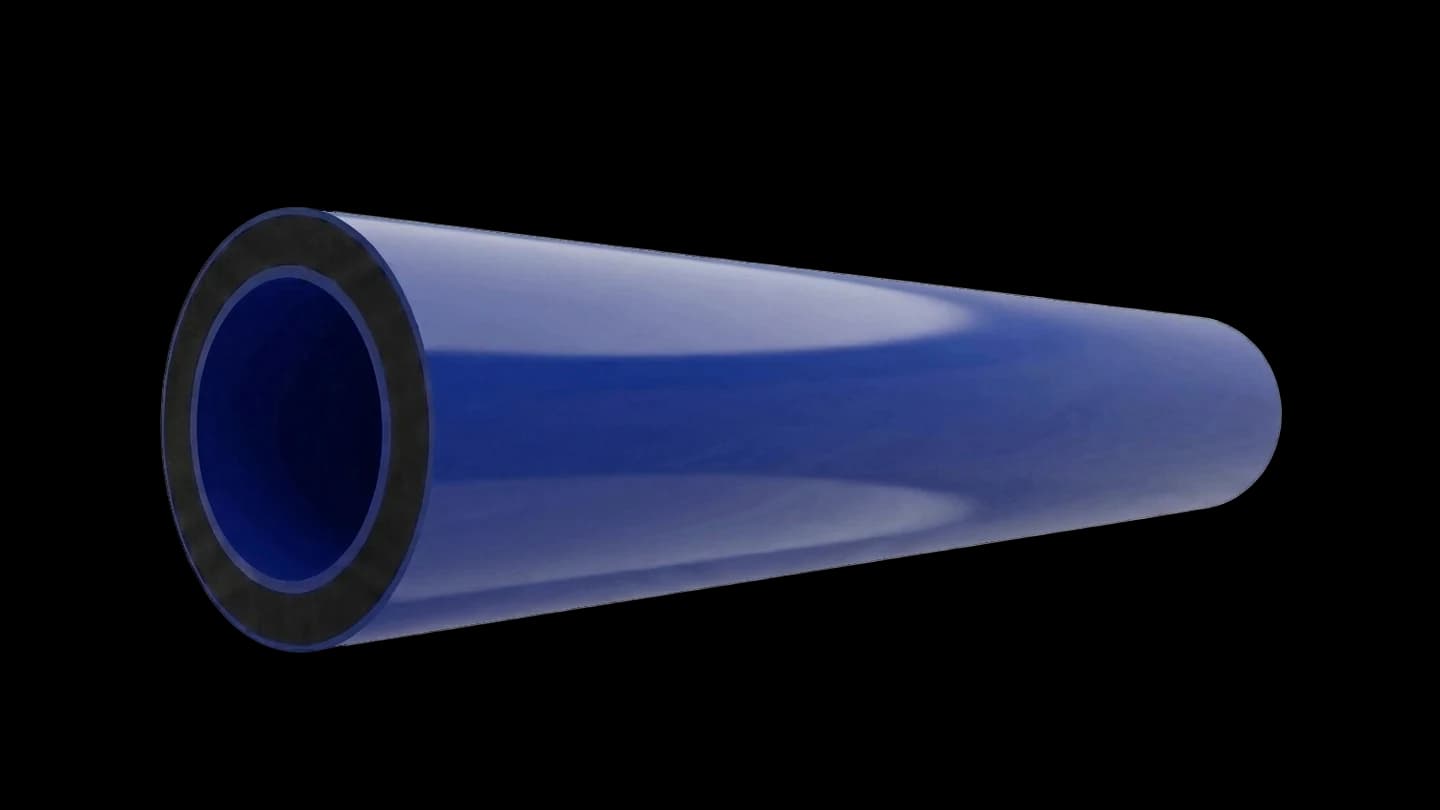
blue skin · black PE100 · blue inner layer
The same build in water marking.
A standard HDPE pipe is single-layer. A co-extruded pipe is formed in two layers at once: roughly 90 % of the wall is PE100, and about 10 % is an outer skin of PE100-RC, resistant to slow crack growth and point loading. The layers fuse in the hot melt during extrusion, so there is no delamination boundary — it is one wall, not a coating. For water mains the inner layer is white virgin PE100: the white colour is visible on the cut face and is direct proof that the raw material is not recycled (recycled stock is always black). For gas the inner layer is black and the outer 10 % is yellow. The practical payoff is laying in stony bedding, trenchless methods (HDD, relining) and much better scratch resistance during installation. Pipe-Plast produces co-extruded pipes d200–630 mm — the only such production in the region.
Trunk water and gas mains in difficult soils, trenchless installation (HDD, relining, rehabilitation), laying without sand bedding, and sections with a high risk of mechanical damage.
Laying into stony ground without sand bedding.
HDD, relining and rehabilitation of existing networks.
Drinking-water mains and gas pipelines up to 10 bar.
A standard single-layer PE100 pipe covers conventional installation completely: a trench, a sand bed and backfill free of stones. A co-extruded pipe is for cases where the wall works in contact with aggressive soil — gravel, rock, construction debris — and for trenchless installation, where the pipe is pulled through and scrapes against the borehole wall.
The outer 10 % of a co-extruded pipe is made of PE100-RC, a material with increased resistance to slow crack growth. It is exactly the point load from a stone and the scratch made during installation that eventually destroy an ordinary pipe; PE100-RC removes that scenario. If the project allows installation without a sand bed, the saving on earthworks usually outweighs the price difference of the pipe.
Virgin polyethylene granules are white; recycled material turns black during reprocessing. The visible white inner layer is an honest quality signal from the plant — it cannot be faked using recycled raw material.
Co-extrusion means two polyethylene layers formed simultaneously in the hot melt on the extrusion line. The layers are fused together, there is no delamination boundary, and both layers count towards the design wall of the pipe. A polypropylene sheath is applied cold on top of a finished pipe and does not count towards the design wall — it works as a replaceable protective jacket 1.5–2 mm thick.
In practice the choice is this: co-extrusion when you need the wall material itself to resist cracking and point loads; a PP sheath when the pipe will be abraded during pulling and surface protection matters most. Pipe-Plast produces both designs in diameters of 200–630 mm; a manager can advise which suits your installation method.
Exactly like ordinary PE100 pressure pipes — butt fusion from d63 upwards and electrofusion at tie-ins and in chambers. The outer PE100-RC layer is weld-compatible with the base polyethylene, so no separate equipment, no special parameters and no stripping of the layer are required.
The only things to watch are the usual facing of the pipe ends and matching SDR classes of the pipes being joined. A butt-fusion joint is stronger than the pipe itself, so the two-layer design creates no weak point at the joint.
Pipe-Plast produces co-extruded pipes in diameters of 200–630 mm; the common class is SDR17 (10 bar working pressure), with SDR13.6 and SDR11 available to order. For water supply the inner layer is white (virgin PE100) and the outer layer black; for gas the inner layer is black and the outer layer yellow.
Water pipes are supplied to GOST 18599-2001 / ST RK ISO 4427-2014, gas pipes to ST RK GOST R 50838-2011 / ST RK ISO 4437-2014. Every batch comes with a quality passport and a certificate of conformity — the package is suitable for tenders and public procurement.
Price depends on the product spec. Call or leave a request — our team will pick the diameter, stiffness and quantity and arrange delivery.